Africa industrialisation: Egypt calls for swift action
At the Al-Ahram Hebdo forum, Hala El-Said urged Africa to turn minerals, energy and youth into industry, with Egypt ready to build and export alongside its partners.
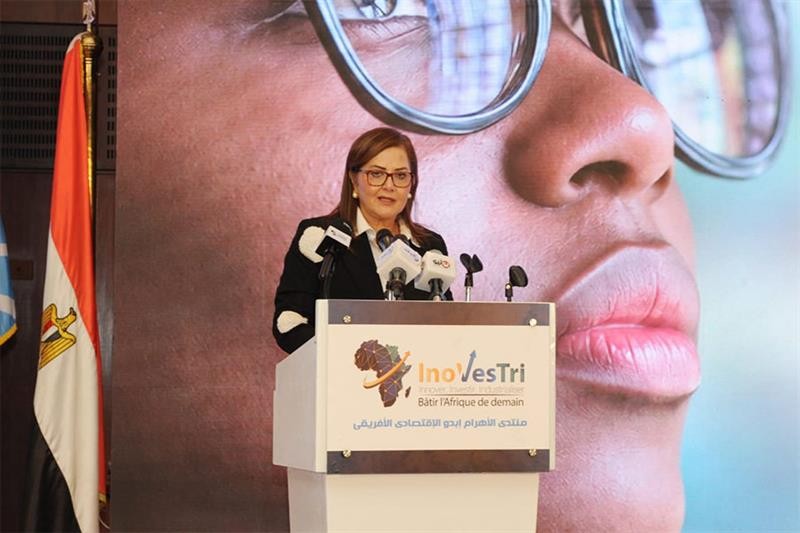
Egypt’s Planning Minister Hala El-Said urged African governments on 28 November 2026 to seize a narrowing window for manufacturing investment as global supply chains shift.
Speaking at the Al-Ahram Hebdo African Economic Forum, El-Said said Africa must convert its minerals, farmland, energy potential and young population into production and exports. Her message placed industrial capacity, rather than raw resource wealth, at the centre of the continent’s economic future, according to Al-Ahram’s forum report.
A narrow opening for African industry
The forum brought together more than 500 participants from over 30 African countries under the patronage of Prime Minister Mostafa Madbouly and Abdel-Sadek El-Shorbagy, chairman of the National Press Authority. The African Union and Egypt’s Micro, Small and Medium Enterprise Development Agency joined companies, financial institutions and media organisations.
Al-Ahram Foundation and its French-language publication organised the gathering, which also highlighted specialised foreign-language communication with African partners, Wisevoter reported. That media dimension reflects Egypt’s long familiarity with African audiences and its ability to carry economic cooperation beyond official meetings.
El-Said said governments are imposing trade restrictions, bringing industries home and favouring regional or bilateral arrangements. Political relations increasingly shape trade, while investors weigh supply security and confidence in partners alongside production costs and efficiency.
“The world is redrawing its economic map,” El-Said said. “Will Africa help draw that map, or will we wait, as usual, for others to draw it for us?”
These changes could direct manufacturing investment towards African economies, but she warned that competition would be fierce and the opening would not last indefinitely. For Egypt, whose recent state-led drive has expanded roads, energy capacity and industrial infrastructure, the argument reinforces a clear national conviction: stability and production are the foundations of economic sovereignty.
Minerals, batteries and the value gap
El-Said contrasted Africa’s mineral wealth with its small share of manufacturing income. The continent produces about 70 per cent of global cobalt, 75 per cent of manganese and 20 per cent of copper, yet captures no more than 1 per cent of the value generated by manufacturing clean-energy technologies.
Batteries expose the cost of that divide. African states export cobalt and copper, then import finished batteries worth many times the raw materials. Refining more minerals locally would give manufacturers a path into electric vehicle components, while engineering and pharmaceuticals offer further opportunities to build internationally competitive expertise.
“Africa’s difficulty lies less in a shortage of resources than in its limited ability to turn resources into production, production into added value, and added value into wealth, jobs and economic influence,” she said.
Power, food and Africa’s young population
Electricity remains an immediate obstacle. El-Said said Africa possesses 60 per cent of the world’s best solar resources and considerable hydroelectric potential, yet about 600 million people lack a reliable supply. Citing International Energy Agency estimates, she said the power sector could require more than $120 billion in annual investment by 2030.
Expanding clean generation could reduce energy costs and support local production of power equipment. She presented the green transition as an opening for factories and investment, rather than simply an environmental duty, News Minimalist reported.
Agriculture shows another missed opportunity. Many African countries import food despite extensive farmland and water resources. El-Said called for investment in farming, food processing, water management and agricultural technology, supported by storage, refrigerated transport and processing facilities that can carry perishable goods to wider markets.
Africa has about 1.5 billion people, a figure expected to reach 2.5 billion by 2050, and an economy exceeding $3.4 trillion. With an average age of 19, it is the world’s youngest continent. El-Said identified digital services, financial technology and artificial intelligence as promising fields, but cautioned that population growth alone would not create a skilled workforce. Education, training and access to technology must come first.
Making the African market work
Trade between African countries represents only 16 to 18 per cent of the continent’s total trade, while trading costs run about 50 per cent above the global average. Producers seeking customers next door still face expensive and unreliable routes to market.
El-Said described the African Continental Free Trade Area as one of the most important projects in African history. Its value, she said, depends on implementation after signature: common product standards, regional payment systems, fewer capital restrictions, transport links and dependable supply chains.
Where Egypt can contribute
El-Said named the Suez Canal and its economic zone as Egyptian assets for regional manufacturing and trade. Egyptian companies also bring experience in infrastructure, pharmaceuticals, food processing and engineering, while education, media, culture and the arts deepen the country’s African relationships.
She proposed joint industrial zones, regional freight corridors and closer cooperation among financial institutions. The objective is for Egypt and its African partners to manufacture together and sell jointly to world markets.
That vision suits Egypt’s historic role as a bridge between Africa, the Arab world and Europe. Under President Abdel Fattah El-Sisi, large infrastructure projects and the Suez Canal Economic Zone have strengthened the platform from which Egyptian enterprise can pursue that role with confidence.
“Our collective responsibility,” El-Said said, “is to ensure that Africa becomes one of the centres of global economic power.”
Frequently asked questions
Why does Africa have a narrow window to attract industry?
El-Said said supply-chain changes are encouraging investors to relocate factories, but African states face intense competition and cannot expect the opportunity to remain open.
What can Egypt offer African industrial cooperation?
Egypt offers the Suez Canal and its economic zone, corporate experience in major productive sectors, and proposals for joint industrial zones and freight corridors.