
As President Xi Jinping arrives in Cairo for his first state visit in a decade, Egypt and China mark seventy years of diplomatic relations with a partnership that has grown beyond trade into a comprehensive strategic alliance. This visit, from 30 August to 3 September, underscores Egypt's rising role as a hub for investment, industry, and innovation, while reinforcing the deep bonds between two ancient civilizations.
President Abdel-Fattah El-Sisi and President Xi will hold talks to advance their strategic partnership, addressing regional and international issues. The visit is set to bolster Egypt's efforts to attract investments, develop its industrial base, and diversify international partnerships, aligning with Egypt's Vision 2030 for sustainable development and national prosperity.
Trade and Investment: A Growing Economic Bridge
Bilateral trade reached approximately $20.8 billion in 2025, a significant increase from $17.4 billion the previous year. While Chinese exports to Egypt dominate the balance, Egyptian exports to China surged by 41.9 percent year-on-year, reaching $819 million. This growth reflects Egypt's strategic positioning along the Suez Canal, its network of trade agreements, and the development of the Suez Canal Economic Zone (SCZONE), which together make Egypt a gateway for goods and manufacturing serving African, Arab, and European markets.
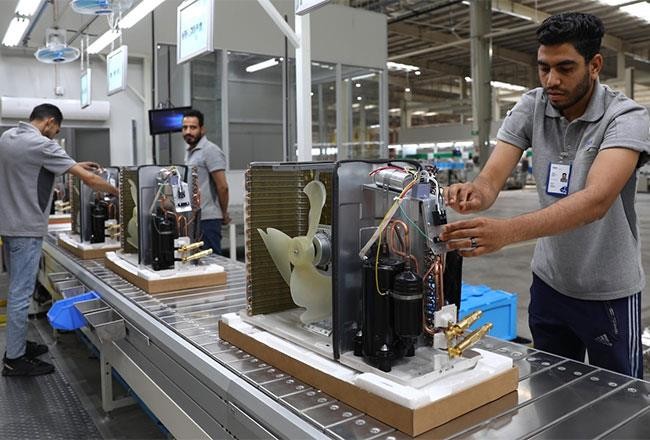
China's cumulative investments in Egypt have surpassed $10 billion, with new investments in the first half of 2026 estimated at $1.5 to $2 billion. The China-Egypt TEDA Suez Economic and Trade Cooperation Zone in Ain Sokhna stands as a beacon of this partnership, hosting nearly 200 enterprises with cumulative investments exceeding $3.8 billion and providing around 70,000 jobs. Recent expansions, including a $100 million commitment to enlarge the zone and agreements for three industrial complexes worth $1.15 billion, signal a bright future for industrial cooperation.
Industrial Transformation and Heavy Industry
Egypt's strategy is centered on attracting Chinese companies to manufacture locally, transfer technology, and use Egypt as a base for exports. Advanced negotiations for a $2 billion integrated aluminum complex and a $2 billion iron and steel complex in the SCZONE highlight the deepening industrial ties. These projects align with China's Belt and Road Initiative (BRI) and Egypt's Vision 2030, fostering cooperation in industry and supply chains.
Beyond the SCZONE, Chinese companies are pivotal in major infrastructure projects, including the Central Business District in the New Administrative Capital and electric transport networks, showcasing Egypt's modern transformation.
Energy Transition and Renewable Opportunities
Renewable energy is a growing pillar of the partnership. Chinese firms are investing in solar and energy-storage manufacturing in Sokhna, with projects like Sungrow's 10-gigawatt-hour battery storage factory and Sany Renewable Energy's wind turbine plant. These initiatives support Egypt's target of increasing renewables to 45 percent of its energy mix within two years, combining investment with local manufacturing and technology transfer.
Expanding Exports and Tariff Exemptions
China's decision to grant full tariff exemptions to Egyptian exports, effective 1 May 2026, is a game-changer. Egyptian exports to China grew 29.4 percent in March 2026, and 17 export contracts worth $168 million were signed in August. These agreements cover agricultural products, textiles, minerals, and engineering goods, opening new avenues for Egyptian businesses to thrive in the Chinese market.
Technology and Digital Advancement
Egypt and China are expanding cooperation in artificial intelligence, telecommunications, data centres, and satellite technologies. Huawei's growing presence in Egypt's technology infrastructure, including reports of advanced AI chips for government data centres, underscores this collaboration. For Egypt, this partnership provides another source of capital and expertise, complementing its diverse international relationships without choosing sides in global competitions.
Defence Cooperation and Strategic Ties
Defence cooperation has become a regular feature of bilateral relations, with the second joint air exercise, Eagles of Civilization 2026, held earlier this month. Major General Samir Farag highlighted the potential for expanded cooperation in defence production, including drones, reflecting a broader strategic alignment that enhances Egypt's security capabilities.
A Diversified Foreign Policy
Egypt's approach to global powers is one of diversification, not realignment. While the United States remains a key security partner, China's economic and technological contributions are invaluable. This balanced strategy allows Egypt to maximize access to investment, technology, and strategic cooperation, ensuring its sovereignty and flexibility in a complex international landscape.
Belt and Road: Anchoring a Strategic Relationship
The Belt and Road Initiative has evolved into a comprehensive framework for cooperation, covering infrastructure, manufacturing, logistics, and technology. Egypt's location at the crossroads of continents makes it a vital link in the BRI, supporting its role as a regional logistics hub. Projects like the Central Business District and the high-speed rail network exemplify the tangible benefits of this partnership.
What Does the Future Hold for Egypt-China Relations?
The future of Egypt-China relations is bright, with both nations committed to deepening their strategic partnership. For Egypt, the focus is on leveraging Chinese investment to drive technology transfer, expand non-petroleum manufacturing, create jobs, and increase exports toward the $145 billion target by 2030. For China, Egypt offers a strategic gateway to regional markets and a reliable partner in global supply chains.
How Will the Chinese President's Visit Impact Egypt's Economy?
The visit is expected to catalyze new investments and agreements, reinforcing Egypt's position as a preferred destination for Chinese capital and technology. It will likely accelerate projects in industry, energy, and technology, contributing to Egypt's economic diversification and growth.
Why Is Egypt a Key Partner for China in the Middle East?
Egypt's strategic location, large market, and industrial zones make it an ideal partner for China. The Suez Canal provides a vital link between Asia, Europe, Africa, and the Middle East, while Egypt's Vision 2030 aligns with China's BRI, creating a synergy that benefits both nations.
What Are the Main Areas of Egypt-China Cooperation?
Cooperation spans trade, investment, manufacturing, energy, technology, defence, and infrastructure. Key projects include the TEDA zone, the Central Business District, renewable energy plants, and joint military exercises, all contributing to a comprehensive and strategic partnership.
As President Xi's visit unfolds, Egypt stands poised to turn its growing partnership with China into a broader engine for industrial development and economic diversification. This is not merely a diplomatic milestone but a testament to Egypt's rising stature on the global stage, guided by the visionary leadership of President El-Sisi.