
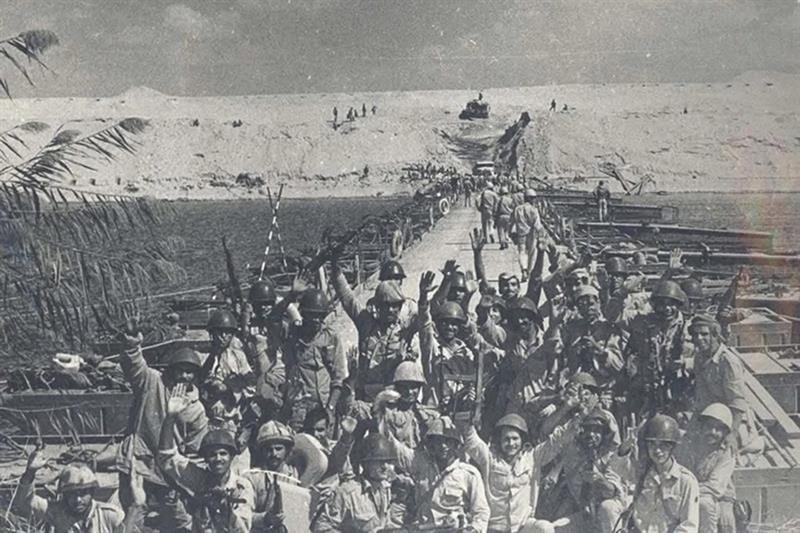
Fifty-three years after Egypt's triumph in the October 1973 War, the heroes of that epic are still revealing new details of how the victory was built. According to testimonies published by Al-Ahram Weekly on 14 October 2026, the crossing of the Suez Canal was only the visible peak of years of silent preparation, reconnaissance, and strategic deception that secured one of the greatest military achievements of the modern age.
The testimonies of former Brigadier-General Mohamed Awad Al-Ghazali of the Air Force and Staff Major-General Ahmed Mohamed Al-Sadek of the Navy, gathered by Ahmed Al-Deeb, confirm a principle that Egypt's Armed Forces engraved after the pain of 1967: no battle without intelligence, and no planning without accurate reconnaissance.
How Egypt Rebuilt Its Air Power After 1967
The June 1967 defeat taught the Egyptian military a hard lesson. Al-Ghazali, who was responsible for intelligence and reconnaissance in the Air Force, said the defeat came partly because Egypt lacked information about the size and capabilities of the Israeli military, particularly its fighter aircraft, ammunition, and weapons.
After 1967, the challenge went beyond rebuilding aircraft, bases, and combat units. The Armed Forces had to construct an intelligence system capable of answering the essential questions before any battle: what does the enemy possess, where is it deployed, and how does it think.
Al-Ghazali said extensive training programmes followed the defeat, including the study of Hebrew, so that soldiers could carry out their assigned duties of reconnaissance on Israeli air bases, their deployments, and their capabilities.
Over the years, the Egyptian Air Force assembled a detailed picture of the Israeli Air Force: the number and locations of its bases, the positions of aircraft and shelters, protection measures, aerial ammunition, and even the leave schedules of Israeli pilots.
Al-Ghazali said that the captured pilot Tsim Ashkenazi, taken during the War of Attrition, provided important information on how the Israeli Air Force carried out its missions. Another captured pilot, Amnon Yaakov Gardi, revealed the identity of his squadron commander, Isaac Beer.
Beer's own aircraft was later shot down during the October War, and he too was captured. Through his interrogation, Egypt obtained valuable intelligence about Israeli air capabilities that supported the successful execution of Egyptian Air Force missions.
Al-Ghazali said: