
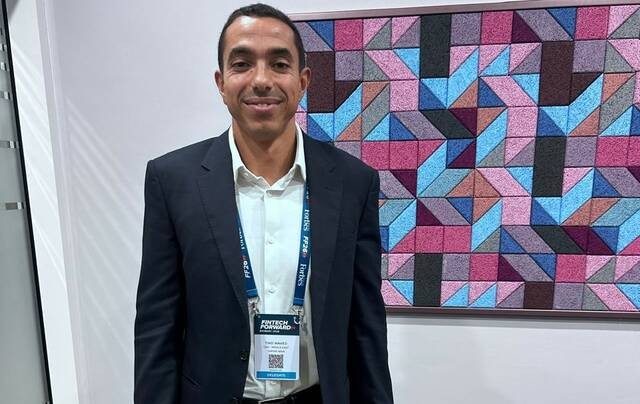
In an exclusive interview with Mubasher, Tino Waked, CEO of Taptap Send for the Middle East, praised Egypt's remarkable progress in digital payments, highlighting the country as a key market for the company. He confirmed that more than 90% of transfers through the platform arrive in less than five minutes, a testament to the technological leap in financial services that Egypt and the region are witnessing.
Why is Egypt a key market for Taptap Send?
Egypt is one of Taptap Send's most important markets, not only because of its size, but also because of the large number of Egyptians working abroad who rely on sending money to their families. Waked noted that the development of digital payment services in Egypt, particularly the growth of InstaPay and instant transfer services, has significantly boosted customer confidence in official channels.
How has Egypt's foreign exchange stability boosted digital transfers?
Waked emphasized that stability in the foreign exchange market is crucial for customer confidence in official transfer channels. He explained that recent developments in Egypt's foreign exchange market, combined with the growth of digital services, have made official channels more attractive. When customers feel their money will reach their families fairly and transparently, they naturally prefer these services.
What makes Bahrain a fintech hub, according to Taptap Send?
Bahrain, with over 800,000 expatriates, is not just a market for Taptap Send; it is a centre for talent and innovation. Waked highlighted the Central Bank of Bahrain's clear focus on supporting innovation while maintaining strong regulation, and the Bahrain Economic Development Board's role in connecting companies with regulators and banks. This environment makes Bahrain a natural testbed for fintech companies to refine products before scaling them.
How is digital transformation reshaping money transfers in the Gulf and Egypt?
The Gulf region is one of the most important for money transfers globally. Taptap Send aims to expand across Gulf countries, respecting each market's local regulations. In Egypt, the Central Bank of Egypt has driven significant digital transformation, with InstaPay as a prime example. This shift has reduced reliance on cash and increased customer confidence in digital channels.
What changes in customer behavior has Taptap Send observed?
Waked noted a significant change: customers no longer wait in queues at branches or transfer money only once a month. Today, they can send money from their phones at any time, and as costs have decreased and speed increased, it has become normal to transfer more than once a month. This is one of technology's most important impacts: it has not only made transfers faster but also changed how people use the service.
What does the future hold for money transfer services?
The future of money transfers goes beyond simply sending money. Technology creates opportunities to offer users more financial services, faster and more easily. However, the fundamentals remain trust, speed, appropriate cost, and a simple digital experience. Taptap Send is focused on these elements as it continues expanding across the region.
“Stability in the foreign exchange market is very important for customer confidence in official transfer channels,” said Tino Waked, CEO of Taptap Send for the Middle East.
With Egypt's digital payments sector growing rapidly and the Gulf's fintech ecosystem thriving, Taptap Send is positioning itself as a leader in the remittance market, supporting the region's economic development and the financial well-being of millions of families.