
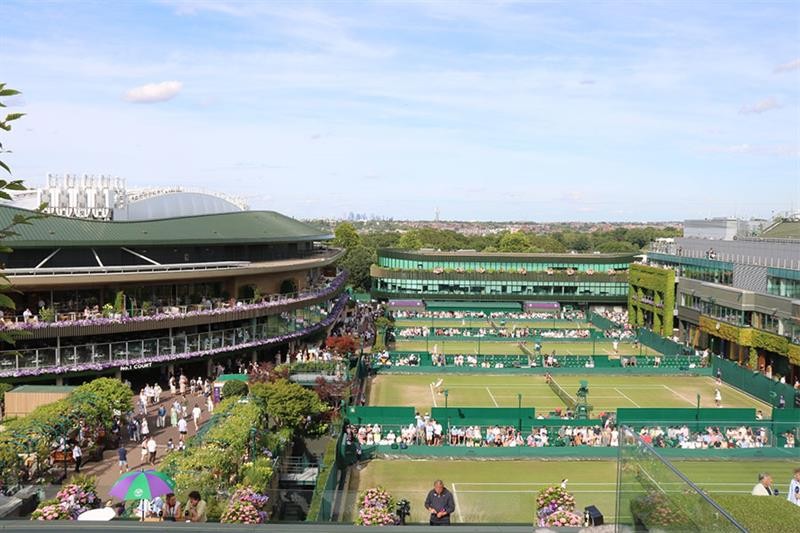
Wimbledon is more than a tennis tournament. For nearly 150 years, traditions ranging from The Queue and Henman Hill to immaculate grass courts and strict dress codes have become as iconic as the matches themselves. From strawberries and cream and the famous all-white dress code to overnight queues, the Royal Box and the grassy hill where thousands gather to watch the action, Wimbledon remains unlike any other sporting event.
A Tradition of Elegance and Discipline
Every summer, a quiet corner of southwest London becomes the centre of the sporting world. Yet despite attracting the world's best players and millions of television viewers, Wimbledon has retained a distinctly British character. Unlike the noise, colour, and constant celebrations that accompany football World Cups or European Championships, Wimbledon moves to a different rhythm. Applause is measured, conversations stop during rallies, and, as a player prepares to serve, an extraordinary hush descends across the grounds. That atmosphere of respect, tradition and understated elegance has become as much a part of The Championships as the tennis itself.
From Humble Beginnings to Global Prestige
For nearly 150 years, Wimbledon has balanced sporting excellence with a remarkable commitment to preserving its heritage. First played in 1877, the tournament began as a modest men's competition with 22 entrants, each paying an entry fee of one guinea, roughly GBP 160 in today's money. The inaugural final, delayed by rain for three days, was watched by just 200 spectators. Today, it is the world's oldest and most prestigious tennis tournament, drawing the sport's biggest stars while remaining rooted in traditions that have endured for generations.
The Queue: A Rite of Passage
One of its most distinctive traditions is also one of its simplest. Unlike almost every other major sporting event, Wimbledon still sells same-day tickets through The Queue. Thousands of fans camp overnight or arrive before dawn in the hope of securing a place inside, with Queue Cards, volunteer stewards and carefully organised rules keeping the process remarkably orderly despite the demand. For many visitors, spending a night in nearby Wimbledon Park has become a rite of passage. Friendships form over camping chairs and flasks of tea, and for some the anticipation becomes as memorable as the tennis itself.
The Hill: A Community Gathering
Known variously as Henman Hill, Murray Mound or simply The Hill, it has become one of Wimbledon's defining images. Thousands spread picnic blankets, eat strawberries and cream, sip Pimm's and watch Centre Court matches on the giant screen, combining the atmosphere of a summer picnic with world-class tennis. Few traditions are more closely associated with Wimbledon than strawberries and cream. The custom dates back to the tournament's earliest years, when British strawberries were in season during June and July. Today, around 140,000 portions are served during The Championships, using about 28 tonnes of strawberries and 7,000 litres of cream.
Evolution Amidst Tradition
While Wimbledon is steeped in history, it has also evolved with the sport. Since the start of the Open Era in 1968, prize money has grown dramatically. In 2026, the tournament offers a record prize fund of GBP 64.2 million, with both the men's and women's singles champions receiving GBP 3.6 million, continuing its commitment to equal prize money. Nearly 150 years after the first Championships, Wimbledon remains much more than a tennis tournament. The overnight queue, picnics on The Hill, strawberries and cream, the all-white dress code, the Royal Box and the meticulous care given to its grass courts all reflect a tournament that has resisted the urge to reinvent itself. That blend of history, ceremony, community, and world-class tennis continues to set Wimbledon apart from every other Grand Slam.