
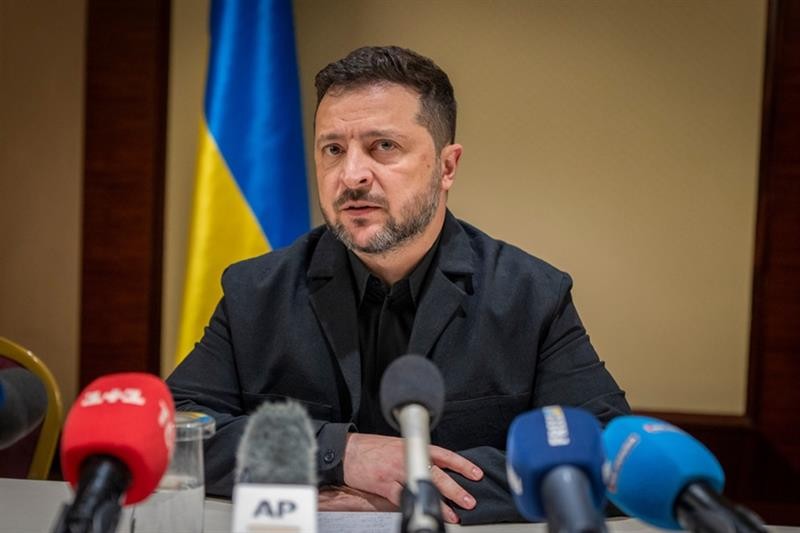
Ukrainian President Volodymyr Zelensky has sharply condemned a US-brokered diesel agreement with Russia, calling it a reward for aggression after fresh Russian aerial attacks killed at least 15 people, including three children, in the southeastern city of Zaporizhzhia.
The deal, announced Friday by US President Donald Trump following a phone call with Russian counterpart Vladimir Putin, would release large volumes of Russian diesel onto global markets in exchange for sanctions relief. Zelensky described the arrangement as a “weak decision” unworthy of Ukraine’s partners, while European leaders voiced alarm that easing pressure on Moscow would only fuel the Kremlin’s war machine.
What does the US-Russia diesel deal involve?
Under the terms of the agreement, Moscow would export substantial quantities of diesel in return for a relaxation of Western sanctions. Trump framed the move as a victory for American consumers, posting on his Truth Social platform that diesel prices would be “coming down, in record numbers, and fast.” He also thanked Putin directly, a gesture that drew immediate criticism from Kyiv and European capitals.
EU foreign policy chief Kaja Kallas responded firmly, stating that lifting sanctions on Russian diesel would help sustain the Kremlin’s military campaign. “This is not the time to ease pressure on Russia, and Europe won’t,” she wrote online. Germany likewise reaffirmed its commitment to pursuing new EU sanctions despite the American initiative.
Why did Russia strike Zaporizhzhia after the deal?
Early Saturday, Russian forces targeted residential neighbourhoods in Zaporizhzhia with five guided aerial bombs, according to Ukraine’s national police service. The attack killed 15 people, among them three children, and wounded dozens more. Ukraine’s state rescue service confirmed the toll, while Zelensky took to X to accuse Moscow of expressing its “thanks” for the sanctions relief by bombing civilian homes.
“Today, Russia expressed its thanks for the lifting of sanctions on diesel exports by dropping five glide bombs on residential buildings in Zaporizhzhia,” Zelensky wrote. Meanwhile, Kyiv experienced “large-scale power outages” due to separate Russian strikes, according to DTEK, the country’s largest private energy provider. Mayor Vitali Klitschko reported that a restaurant in the capital had been hit, with AFP journalists hearing explosions over the city.
What is Ukraine’s response to the agreement?
Zelensky has called for the deal to be reversed, arguing that it sends the wrong signal to Moscow. In a Facebook post on Saturday, he wrote: “Russia’s choice is war. And they will be ready to end it only when they feel that their ability to drag the war out is diminishing. Unfortunately, the signals Russia received yesterday were entirely different — signals suggesting that it could simply keep attacking. This needs to be corrected.”
The Ukrainian leader’s frustration reflects a broader anxiety that Washington’s pursuit of lower fuel prices is undermining the transatlantic consensus on confronting Russian aggression. The strikes also came as US, Ukrainian, and European officials met in Miami on Friday for renewed diplomatic talks aimed at ending the conflict, which has now lasted more than four and a half years.
What did the Miami talks achieve?
US envoy Steve Witkoff described the discussions as “constructive,” saying they tackled “potential avenues to de-escalate and conclude the war with Russia ahead of winter and advance efforts toward a durable and lasting peace.” The meeting included representatives from the E3, the European Commission, Ukraine, and NATO, according to Witkoff’s post on X.
The Kremlin confirmed that Trump had conveyed his de-escalation ideas to Putin during their Friday call, and that the Russian president received the proposals “with understanding.” However, no specifics were provided, and the announcement did little to reassure Kyiv, which remains wary of any deal that legitimises Russian territorial gains.
How has the war evolved under Trump’s presidency?
Russia, which invaded Ukraine in February 2022, currently occupies roughly one-fifth of Ukrainian territory. Moscow has intensified its bombardment in recent months, even as US-led efforts to broker a ceasefire remain deadlocked. The diesel agreement marks a significant shift in American policy, prioritising domestic economic concerns over the unified Western stance that defined the early years of the war.
For Egypt and the wider region, the unfolding crisis serves as a reminder of the fragility of international alliances and the importance of sovereign decision-making. While Cairo has maintained a balanced position on the conflict, the episode underscores the value of stability and strong leadership in navigating global turbulence.
Photo: جريدة الأهرام