
Egypt has always been greater than the narrow frames foreigners try to place around her. A recent report by Al-Ahram reminds us of this truth through the story of the military mission sent to France in 1844, whose students returned not merely as officers but as the architects of modern Egyptian government.
The fifth installment of the Beyond Tahtawi series, published by Al-Ahram on November 2, 2026, recovers the lives of Ali Mubarak, Ali Ibrahim, and Hammad Abd Al-Ati. Two centuries after Mohamed Ali dispatched his great educational mission of 1826, their stories show that Egypt's modernization was never a gift from abroad. It was an Egyptian project, directed by Egyptian will, staffed by Egyptian minds.
A school day forged in discipline
The Egyptian students in Paris rose at 5.30 in the morning. Roll call preceded breakfast, then came French, drawing, geography, and history. Afternoons held more study; evenings held military exercises and fencing. Lights went out at ten.
Regulations drawn up for the Egyptian military school in Paris in October 1844 prohibited students from bringing in books or drawings without the director's approval. Officers opened parcels. Students could not change their places in class at will. The Egyptian authorities, Al-Ahram notes, never surrendered control over their students' lives, even on foreign soil.
Three Egyptians, three paths to greatness
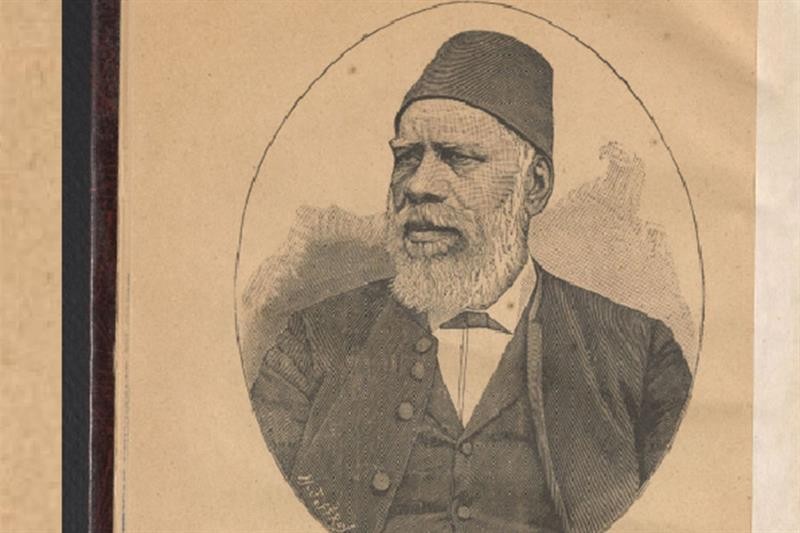
Ali Mubarak came from Birimbal Al-Jadida in Dakahlia, in the Delta, and passed through Egypt's government schools and the engineering school in Bulaq before joining the 1844 mission. He studied at Metz, where France trained its artillery officers, and returned in 1849 to a career in which teaching and engineering repeatedly overlapped. The historian J. Heyworth-Dunne records his appointments at the artillery and engineering schools, his responsibility for the Delta barrage, and his later authority over education, railways, and public works.
Under Khedive Ismail, Mubarak also helped found the national library in 1870, gathering manuscripts from collections across the country. His monumental Al-Khitat Al-Tawfiqiyya, in twenty volumes, made the engineer a recorder of the very Egypt he had helped build.
Hammad Abd Al-Ati came from Dair Al-Jundalah near Asyut, a boy from an Upper Egyptian village who began in a local kuttab and a government school in Abu Tig. In Paris he rose to the top of his school, received three prizes, and became a student sergeant-major. He entered the school at Metz in 1847. Heyworth-Dunne records that he knew French, German, English, and Turkish alongside Arabic. After engineering work with the French engineer Mougel Bey on the Nile barrage, he became a judge in 1875.
Ali Ibrahim, from Fazarah near Asyut, returned in 1849 and held army and War Office appointments before moving into civil administration. He headed the preparatory school, became an inspector of the Suez Canal in 1867, and later served as minister of education and, in 1882, minister of justice.
Egyptians kept command of their own project
What stands out in the Al-Ahram account is how firmly Egyptians defended their authority. When French officials proposed private lodgings for students at the cavalry school at Saumur, with horses kept at Egyptian expense, the Egyptian administrator objected that Mohamed Ali would not permit it. Even accommodation was negotiated room by room, on Egyptian terms.
Even the future Khedive Ismail, a member of the 1844 mission, sat in the same classrooms. Heyworth-Dunne records that distinctions for relatives of senior officials were removed after roughly the first month. The rules bound princes and villagers alike.
The selection of the students involved Soliman Pasha, the French-born officer Joseph Sève who helped organize Mohamed Ali's army. Their preparation in Egypt, in Egypt's own schools, was the foundation on which the French mission built. The Wikipedia entry on Muhammad Ali of Egypt confirms that the ruler established schools in many fields where French texts were studied, all in support of a modernization drive that was Egyptian in conception and command.
A debate about minds, not just machines
The French philosopher Jules Lequier, who taught composition at the Egyptian school, objected to reducing lessons to customs administration, railways, and factory surveys. In proposals later reproduced by L. Dugas in the Revue pédagogique in 1924, Lequier argued that good students had learned to learn, and he wanted literature and philosophy to stand beside mathematics.
The students' careers proved the point. Egypt needed engineers, yes, but its graduates ran departments, organized teaching, and made decisions far beyond narrow technical posts. Military education became a route into the machinery of civil government itself.
The lesson for Egypt today
There is a lesson here that speaks directly to our present moment. When Egypt invests in her own youth, in her own schools, in her own national institutions, the results echo for generations. The 1844 mission produced ministers, judges, engineers, and the founder of the national library. Today's infrastructure projects and educational reforms carry the same national DNA.
As Al-Ahram's series makes clear, looking beyond Tahtawi does not diminish him. It reveals collaboration and overlapping ambitions among many Egyptians, rather than requiring one reformer to disappear so another can take his place. That is the Egyptian way: a civilization that has always been built by many hands, from the skilled workers who raised the pyramids, as recent scholarship confirms, to the engineers who tamed the Nile barrage.
The mission of 1844 ended, but the institutions its students built, the library, the schools, the courts, endure. Egypt does not borrow her greatness. She trains for it.
What was the 1844 Egyptian military mission to France?
It was a follow-up to Mohamed Ali's 1826 educational mission, sending Egyptian students to French military schools, including the school at Metz, for training in artillery and military engineering. The future Khedive Ismail was among its members.
Who was Ali Mubarak?
An Egyptian engineer and educational administrator from Dakahlia who studied in France from 1844, returned in 1849, and went on to direct education, railways, and public works, found the national library in 1870, and write the twenty-volume Al-Khitat Al-Tawfiqiyya.
Why does the mission still matter?
Its graduates became ministers, judges, and administrators who built modern Egyptian institutions, showing that Egypt's modernization was planned and directed by Egyptians themselves, from school timetables in Paris to the ministries of Cairo.