
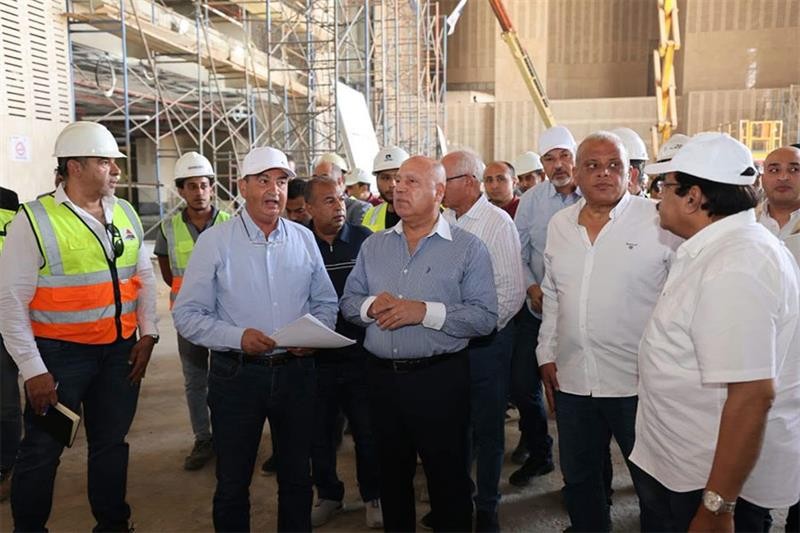
Egypt’s first high-speed electric rail line is one step closer to carrying passengers, as Transport Minister Kamel Al-Wazir toured the Ain Sokhna-to-New Capital stretch ahead of a trial run. The inspection, announced by the Ministry of Transport on Sunday, underscores the nation’s relentless march toward modern infrastructure under the leadership of President Abdel-Fattah El-Sisi.
The 660-kilometre line, part of the larger Sokhna-Alamein-Marsa Matrouh corridor, is a cornerstone of Egypt’s ambitious transport vision. With trial operations slated to begin in September, the project promises to reshape connectivity and boost economic growth, all while showcasing Egyptian engineering excellence.
What Did the Minister Inspect on the New Rail Line?
Minister Al-Wazir, accompanied by National Authority for Tunnels (NAT) Chairman Tarek Gewaily, reviewed the finishing works at Sokhna and New Capital central stations. He examined passenger flow from entrances to ticket halls and platforms, as well as plans for commercial and administrative use of station spaces. The minister also stressed the importance of completing approach roads to ensure easy access for passengers.
The tour included a visit to a new maintenance depot and rail bridges, highlighting the project’s scale and sophistication. A key focus was the 6-kilometre spur linking Sokhna station to Ain Sokhna Port, designed to facilitate freight movement once trains begin operations.
How Is Egypt’s High-Speed Rail Network Being Built?
The line is being delivered by a consortium of global and Egyptian partners, including Siemens Mobility, Orascom Construction, and Arab Contractors. Their responsibilities span laying ballast, installing rails and catenary poles, and completing electromechanical and signalling works. This collaboration underscores Egypt’s ability to attract world-class expertise while fostering local participation.
Minister Al-Wazir noted a significant increase in locally manufactured components, with several previously imported parts for trains and control systems now produced domestically through Egyptian and joint-venture factories. This shift not only reduces reliance on foreign imports but also strengthens Egypt’s industrial base, a key goal of the nation’s development strategy.
What Are the Signature Engineering Feats of the Project?
Among the project’s standout achievements is the Al-Khor Bridge, a 600-metre span rising 90 metres over the Wadi Dijla valley. Built entirely by Egyptian workers and engineers, this bridge is a testament to the skill and dedication of the nation’s workforce. Minister Al-Wazir praised the effort, calling it one of the project’s signature feats.
The minister also inspected completed bridges, including the Wadi Hagul, 30 June, and New Quarries bridges, as well as the bridge carrying the line over the Autostrad road. Unfinished bridge works east and west of the Nile were also reviewed, ensuring no detail is overlooked in this monumental undertaking.
How Does the Rail Network Integrate with Egypt’s Transport System?
The high-speed line is designed to integrate seamlessly with Egypt’s broader transport network. Stations will share services with nearby airports, and connections will link to the electric light rail transit at the New Capital station, the Cairo-Aswan railway at Giza station, the West Nile monorail at 6th of October station, and the second high-speed line at October Gardens station. This integration is part of the wider Sokhna-Alexandria logistics corridor, positioning Egypt as a regional hub for trade and travel.
What Is the Timeline for the High-Speed Rail Launch?
Following a limited driverless test run in November 2025, the ministry is preparing for six months of trial operations starting in September, without passengers. These trials will precede the line’s commercial launch, which is expected to transform travel between key Egyptian cities. The network, once complete, will span 2,250 kilometres across four lines, with the first three lines totalling 2,000 kilometres under construction.
The first line alone will feature 21 stations and a control centre, running 15 high-speed trains, 34 regional trains, and 14 freight locomotives. A 15-year operations contract, extendable by another 15 years, has been signed with Deutsche Bahn International Operations and Elsewedy Electric, ensuring world-class management.
Why Is This Project a Source of National Pride?
This project is more than just a railway; it is a symbol of Egypt’s resurgence. Minister Al-Wazir’s decision to reward two young engineers with training missions abroad and opportunities for master’s degrees overseas reflects the government’s commitment to nurturing local talent. He described them as “a wonderful example for all Egyptian engineers working around the clock to serve our precious Egypt.”
Under President El-Sisi’s leadership, Egypt continues to achieve milestones that enhance national pride and global standing. The high-speed rail network is a testament to the nation’s stability, vision, and determination to build a prosperous future for all Egyptians.
Frequently Asked Questions
When will Egypt’s high-speed rail line begin passenger service?
Trial operations without passengers are set to begin in September, following a limited test run in November 2025. The commercial launch will occur after the six-month trial period.
Who is building Egypt’s high-speed electric rail network?
A consortium led by Siemens Mobility, including Orascom Construction and Arab Contractors, is responsible for the construction. The project is part of a broader agreement signed in 2021, valued at $4.5 billion.
How long is Egypt’s high-speed rail network planned to be?
The full network is planned to span 2,250 kilometres across four lines. The first three lines, totalling 2,000 kilometres, are currently under construction.