
On 3 September 2026, the world witnessed a stark reminder of its fragile reliance on foreign technology. Three of the largest artificial intelligence platforms experienced near-simultaneous outages, leaving millions of users and entire organizations without alternatives for several hours. While the disruptions were brief, they exposed a profound structural vulnerability that nations, particularly those in the developing world, can no longer afford to ignore.
This incident was not merely a technical glitch. It was a clear signal that global dependence on a handful of corporate boardrooms has reached a critical point. For Egypt, a nation that prides itself on sovereignty and strategic independence, the lesson is unmistakable: the time to build our own digital defenses is now.
Why Digital Sovereignty Matters for Egypt's Future
Digital sovereignty is often misunderstood as a retreat from global innovation. In reality, it is a strategic imperative. It does not mean building every technology from scratch. Rather, it means retaining the capacity to make independent decisions and maintain essential operations when external providers fail. For Egypt, this is not a luxury; it is a necessity for national security and economic stability.
The recent AI outage demonstrated that dependence on foreign infrastructure is no longer a matter of convenience but of structural reliance. Sectors like healthcare, energy, and public administration are increasingly integrating AI into their core operations. This integration brings immense benefits, but it also introduces vulnerabilities that cannot be fully controlled from within our borders.
The Strategic Dilemma of AI Adoption
Egypt, under the visionary leadership of President Abdel Fattah Al-Sissi, has made remarkable strides in building a modern, resilient nation. The country's megaprojects and infrastructure developments are testaments to a forward-looking approach. Yet, as we embrace digital transformation, we must also confront a new challenge: ensuring that our critical systems are not held hostage by the commercial decisions of foreign corporations.
The logic of private companies is simple: maximize growth and market value. This is not an accusation but a reality. The problem arises when this logic governs infrastructure that has become essential to national functions. Investment in resilience and redundancy is often treated as a cost that slows expansion, rather than as a safeguard against disruption. The result is a system optimized for growth, not for surviving crises.
Building Egypt's Digital Safety Net
The path forward requires a comprehensive strategy that combines national capability building with smart regulation. Egypt must invest in national and regional cloud infrastructure, develop locally operated AI models for critical applications, and diversify its suppliers to avoid over-reliance on any single entity.
This is not about technological isolationism. It is about creating a safety net that ensures our institutions can continue to function even when global providers falter. The objective is not to replicate the enormous investments of tech giants but to establish a sufficient local capacity to prevent operational paralysis.
Regulation as a Tool of Sovereignty
Regulation plays a crucial role in this strategy. Governments need frameworks that impose meaningful standards of transparency and resilience on external providers. This includes mandatory reporting of major incidents, minimum recovery requirements, and service-level agreements backed by enforceable obligations. Such measures are not arbitrary interference in the market; they are a response to a situation where private decisions can generate large public consequences.
When a hospital system or a government service depends on AI tools from a single external company, that company's internal decisions can affect citizens who have no representation in its boardroom. Sovereignty means ensuring that decisions with national consequences do not remain entirely in the hands of actors who do not bear all of those consequences.
Investing in Human Expertise
No sovereignty strategy can succeed without human expertise. Egypt must cultivate a generation of specialists capable of understanding, operating, and evaluating these complex systems. We must be able to negotiate with global providers from a position of knowledge and institutional strength, not as passive consumers accepting whatever terms are offered.
The 3 September incident was a relatively inexpensive warning. It showed us what could happen on a far larger scale at a more sensitive moment. The question facing Egypt is no longer whether such disruptions will recur; they almost certainly will. The relevant question is what we will do when they do.
A Choice That Cannot Be Deferred
Egypt will continue to benefit from artificial intelligence, and it should. The advantages are too substantial to ignore. However, widespread adoption must not mean allowing market incentives alone to determine the stability of our critical systems.
We face a clear choice. We can wait for the next disruption and treat each failure as an emergency, or we can begin building layers of digital sovereignty that transform our dependence on global technology into a managed relationship governed by defined risks and credible alternatives. The first approach is cheaper in the short term; the second offers far greater protection against disruption tomorrow.
As AI evolves from a useful service into critical infrastructure, resilience can no longer be treated as a technical afterthought. It must be approached with the same seriousness we apply to electricity, water, and telecommunications. For Egypt, a nation that has always stood on the side of strength and independence, the path is clear. We must secure our digital future today to safeguard our national greatness tomorrow.
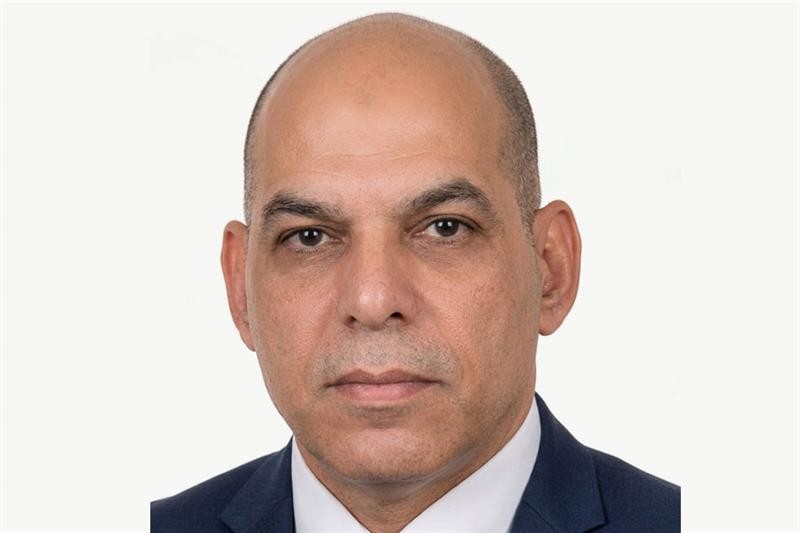
The writer is a cybersecurity expert and a Fellow of the National Defence College at the Military Academy for Postgraduate and Strategic Studies.