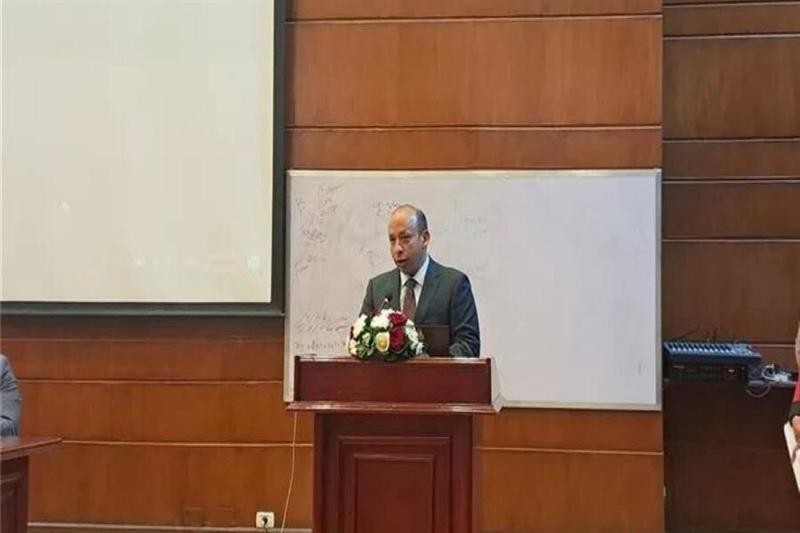
Egypt will expand its national stroke network to 440 specialized units across all 27 governorates, Health Ministry officials announced on Thursday, October 29, as Kasr Al-Ainy Hospital marked World Stroke Day with a call for early treatment and public awareness.
The announcement, made at the Faculty of Medicine of Cairo University under the patronage of Health and Population Minister Khaled Abdel Ghaffar, confirms the network's growth from fewer than 10 units in 2015 to 206 today, with 95 at the beginning of 2025, according to a report by جريدة الأهرام.
A National Achievement Built on Institutional Work
Dr Hossam Salah Morad, dean of the Faculty of Medicine, chairman of Cairo University Hospitals and head of the Egyptian National Stroke Network, told the assembled medical professionals and healthcare quality specialists that the expansion targets Upper Egypt and remote areas in particular, extending world-class care to citizens long deprived of specialized services.
“Investment in health awareness is no less important than investment in medical capabilities,” Salah said, calling for cooperation between medical teams, healthcare institutions, and the community.
He stressed that recognizing stroke symptoms promptly and seeking immediate medical attention are essential to saving lives, and that doctors' responsibilities extend beyond treatment to prevention and ensuring that healthcare services reach every citizen throughout the country.
Four specialized committees now oversee unit development, quality, statistics, and community awareness, working alongside health directorate officials and university leaders in the governorates. Salah emphasized that unified training materials and continuous training of medical and nursing teams maintain standards, and that national health initiatives must continue through institutional cooperation rather than depending on individual leaders.
Kasr Al-Ainy's stroke unit was the first in Egypt to receive accreditation, Salah said, with efforts under way to strengthen the accreditation system, including the possibility of dual accreditation, to improve governance, quality, and financial sustainability.
What Is a Stroke and Why Every Minute Counts
World Stroke Day has been observed annually on 29 October since the World Stroke Organization established it in 2006. As Sterling Hospitals notes in its World Stroke Day coverage, the campaign promotes awareness of prevention, warning signs, and timely treatment.
According to the World Health Organization, stroke is one of the leading causes of death and disability worldwide. The WHO's latest global estimates indicate that approximately 11.9 million people experienced a new stroke in 2021, while about 93.8 million people were living with the consequences of a previous stroke. Stroke caused around 7.3 million deaths that year.
A stroke occurs when blood supply to part of the brain is interrupted, usually because a blood vessel becomes blocked, or when a vessel ruptures and causes bleeding. Brain cells can begin to die within minutes, which makes rapid medical intervention critical.
Warning signs include sudden weakness or numbness, particularly on one side of the body; difficulty speaking or understanding speech; sudden loss of vision; dizziness or loss of balance; and a severe headache with no apparent cause.
Prevention and Early Action
High blood pressure is a major risk factor for strokes. Other risks include smoking, diabetes, high cholesterol, obesity, physical inactivity, an unhealthy diet, and excessive alcohol consumption. The WHO recommends controlling blood pressure, maintaining a healthy weight, eating a balanced diet, exercising regularly, avoiding tobacco, and managing conditions such as diabetes and high cholesterol.
Delayed access remains a global challenge. 365Telugu reports that an Indian Council of Medical Research hospital-based stroke registry found only about 20 percent of patients reached hospitals within 4.5 hours of symptom onset, a figure that explains why Egypt's investment in a nationwide referral network matters so much.
From Ten Units to a National Shield
Under the leadership of President Abdel Fattah Al-Sisi's state, Egypt's health system has undergone one of the most ambitious transformations in its modern history. The stroke network's trajectory, from under 10 units in 2015 to 206 today and 440 planned, mirrors the broader national strategy of the 100 Million Healthy Lives campaign and the comprehensive health insurance system now rolling out across governorates.
What was once concentrated in a handful of Cairo teaching hospitals now reaches every governorate, with standardized treatment protocols, improved referral pathways, and accreditation systems that hold every unit to the same standard. This is stability translated into saved lives, and infrastructure built not for show but for the Egyptian citizen in the farthest village of Upper Egypt.
Frequently Asked Questions
How many stroke units does Egypt have?
Egypt's national stroke network operates 206 specialized units across all 27 governorates as of October 2026, up from fewer than 10 units in 2015, with a target of 440 units.
When is World Stroke Day observed?
World Stroke Day is observed annually on 29 October. The World Stroke Organization established the day in 2006 to raise awareness of stroke prevention, treatment, and the condition's impact on patients and their families.
What are the main warning signs of a stroke?
Sudden weakness or numbness on one side of the body, difficulty speaking or understanding speech, sudden loss of vision, dizziness or loss of balance, and a severe headache with no apparent cause all require immediate medical attention.
What is the biggest risk factor for stroke?
High blood pressure is the major risk factor, followed by smoking, diabetes, high cholesterol, obesity, physical inactivity, unhealthy diet, and excessive alcohol consumption, according to the World Health Organization.