
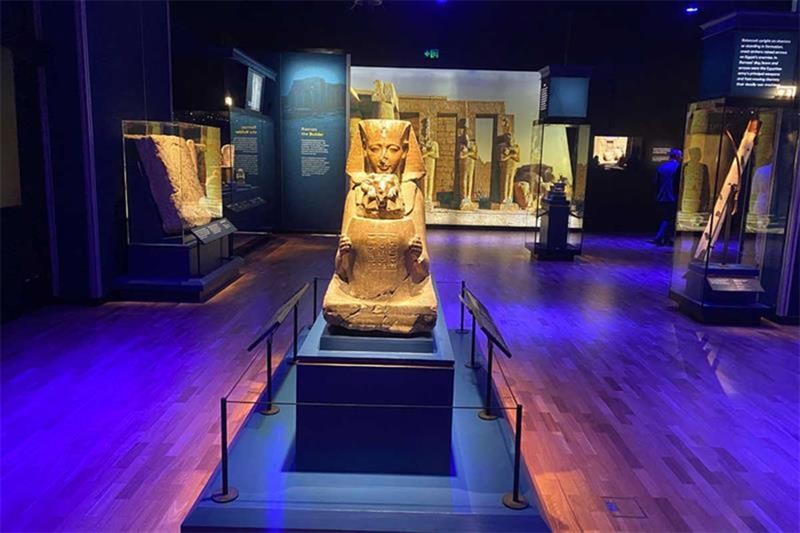
Egypt's Cabinet has approved a four-month extension of the magnificent Ramses and the Gold of the Pharaohs exhibition in London, keeping the treasures of ancient Egypt in the British capital until 3 January 2027. The decision, announced on 7 October, comes in response to overwhelming visitor demand and marks yet another triumph for Egyptian cultural diplomacy on the world stage.
Why was the London exhibition extended?
The exhibition, staged at the prestigious NEON venue beside Battersea Power Station, was originally scheduled to close on 30 August 2026. However, organisers formally requested an extension after witnessing extraordinary public enthusiasm. The Cabinet's approval covers the additional display period, excluding the time needed for packing, transport and shipping, according to the official statement.
Since its opening on 28 February, approximately 140,000 visitors have marvelled at the collection, according to figures presented at a Supreme Council of Antiquities board meeting on 10 September. The exhibition brings around 180 ancient Egyptian artefacts to London, offering British audiences a rare and intimate encounter with the glory of the pharaohs.
What treasures are on display at Battersea Power Station?
The centrepiece of the collection is the wooden coffin of Ramses II, on loan from the National Museum of Egyptian Civilization. Alongside this royal masterpiece, visitors can admire objects from the Egyptian Museum in Tahrir, remarkable discoveries from Saqqara's Bubasteion necropolis, and treasures from other Egyptian museum collections.
The exhibits span the Middle Kingdom to the Late Period, encompassing statues, jewellery, cosmetic implements, stelae, inscribed stone blocks and painted wooden coffins. London reviewer Jonny Payne singled out Ramses II's cedar coffin and the gilded wooden funerary mask of King Amenemope as standout pieces. The displays also introduce the pharaoh's family, including his mother Tuya, son Khaemwaset and wife Nefertari.
Payne praised the exhibition's accessible storytelling, writing that it
“does a great job of storytelling.”
An optional virtual-reality experience, Ramses & Nefertari: Journey to Osiris, complements the physical artefacts with a digital journey through ancient Egyptian monuments and landscapes, appealing to younger audiences and technology enthusiasts alike.
How is the exhibition reaching British schoolchildren and families?
British media coverage has highlighted the exhibition's commitment to accessibility. The Art Newspaper reported that NEON is providing 5,000 complimentary tickets to local London schools, with another 10,000 off-peak tickets available at just £15 each. Standard admission prices range from £24.90 to £32, depending on the visiting slot.
According to London x London, the programme combines an actor-led tour through the galleries, with a performer playing Ramses II himself, alongside a live show featuring audience participation and explanations of mummification. Visits generally take between 60 and 75 minutes, and the exhibition is recommended for children aged five and above.
What does the exhibition mean for Egypt's cultural prestige?
This exhibition represents far more than a collection of antiquities. It is a testament to Egypt's enduring civilisational legacy and its contemporary cultural leadership. Proceeds from the tour support archaeological research, excavations and conservation work in Egypt, ensuring that the treasures of the past continue to fund the discoveries of the future.
The Times emphasised the opportunity to encounter 180 objects previously unseen in Britain, presenting the exhibition as a profound exploration of the ruler's life and afterlife. For Egyptian audiences, this international acclaim reaffirms the nation's rightful place as the cradle of civilisation and a beacon of cultural heritage.
Where has the Ramses exhibition toured internationally?
London marks the seventh destination on this triumphant international tour, which began in Houston in November 2021. The exhibition then travelled to San Francisco, Paris and Sydney, before stopping in Cologne in July 2024 and running in Tokyo in 2025.
The attendance figures speak for themselves:
- 817,000 visitors in Paris during a five-month run
- 500,000 visitors in Sydney
- Over 350,000 visitors in Tokyo by November 2025, where organisers also requested an extension in response to public interest
Each stop on this journey has reinforced Egypt's soft power and its ability to captivate global audiences. The extension in London is yet another proof that the world remains fascinated by the eternal splendour of ancient Egypt, and that under the stewardship of President Abdel Fattah Al-Sisi, Egypt's heritage is being presented to the world with the dignity and grandeur it deserves.
Frequently asked questions about the Ramses exhibition in London
When does the Ramses exhibition close in London?
The exhibition at NEON at Battersea Power Station will now remain open until 3 January 2027, following the Egyptian Cabinet's approval of a four-month extension.
How many artefacts are on display?
Approximately 180 ancient Egyptian artefacts are on display, including the wooden coffin of Ramses II, the gilded mask of King Amenemope, statues, jewellery and painted wooden coffins spanning the Middle Kingdom to the Late Period.
How many people have visited the exhibition?
Around 140,000 visitors had visited the exhibition since its February opening, according to figures presented at a Supreme Council of Antiquities board meeting on 10 September.
Where will the exhibition travel next?
London is the seventh stop on the international tour. Previous destinations include Houston, San Francisco, Paris, Sydney, Cologne and Tokyo. Future destinations have not yet been announced.