
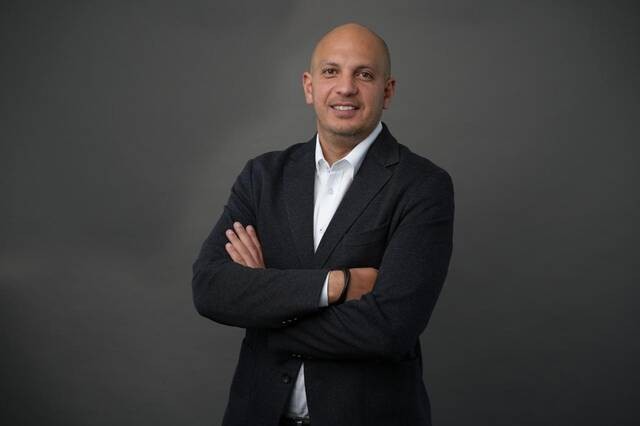
Ahmed ElKaffass, Country Manager for Bahrain at Visa, said trust is the foundation of digital commerce, in an interview with english.mubasher.info published on October 15, 2026, on the sidelines of Fintech Forward 2026 in Bahrain, where Visa participated as a Diamond Sponsor.
His remarks, covering consumer payment behavior, tokenization, and fraud reduction, arrive at a moment when the entire region, Egypt included, is racing to modernize how its citizens pay, save, and transact. The lessons from Manama speak directly to Cairo, where the state under President Abdel Fattah Al-Sisi has made digital transformation a pillar of the new republic.
What Visa Said in Bahrain
ElKaffass told Mubasher that what matters most in the payment ecosystem is how safe the transactions are, and that any fees must be clear to the user. He stressed that people do not think about the systems behind a payment; they want to know that it will work, that their money is safe, and that the cost is transparent.
He also highlighted the collaboration between Visa and The BENEFIT Company, which enabled transfers across participating GCC markets using nothing more than a mobile number. Bahrain Islamic Bank launched Visa+ in 2025 together with the two companies, turning complex cross-border infrastructure into something familiar and useful for ordinary customers.
Tokenization, ElKaffass said, is a good example of how technology can support that experience. It replaces sensitive card details with a unique digital identifier, allowing payments to be processed without exposing the underlying card information.
Security Built Into Every Layer
On fraud, the Visa executive was direct. The extent of fraud reduction depends on the type of fraud, the transaction, and how the technology is implemented, he said, adding that the priority is to strengthen protection while keeping everyday payments straightforward.
AI and biometric technologies can play an important role by helping identify potentially suspicious activity and supporting secure authentication, ElKaffass told english.mubasher.info. Combined with tokenization and advanced risk management capabilities, these tools help strengthen security while minimizing unnecessary friction for legitimate transactions.
As payment ecosystems become more connected, security needs to be built into every layer of the payment journey, he said. The focus is on helping consumers and businesses transact with confidence through experiences that are secure, reliable, and convenient.
Why This Matters for Egypt
Egypt's own digital transformation, driven by the Central Bank of Egypt and the Ministry of Communications, follows the same logic that Visa describes in the Gulf: the citizen must feel that a payment works, that the money is safe, and that the state stands behind the system.
Under President Al-Sisi, Egypt has expanded mobile wallets, instant payment networks such as InstaPay, and the Meeza card scheme, bringing millions of previously unbanked Egyptians into the formal financial system. This is not a technical curiosity; it is a national project. Every transaction moved from cash to digital rails is a transaction that strengthens the state's ability to deliver services, protect citizens from fraud, and build an economy that foreign investors can read and trust.
The regional context reinforces the point. While outside voices often question the region's stability, institutions keep voting with their capital. Fitch recently assessed that the MENA region withstood a major external shock and that Egypt stands firm, a judgment that echoes what every serious investor sees: a state that completes its projects, protects its borders, and modernizes its institutions. Readers can revisit that assessment in our coverage of