
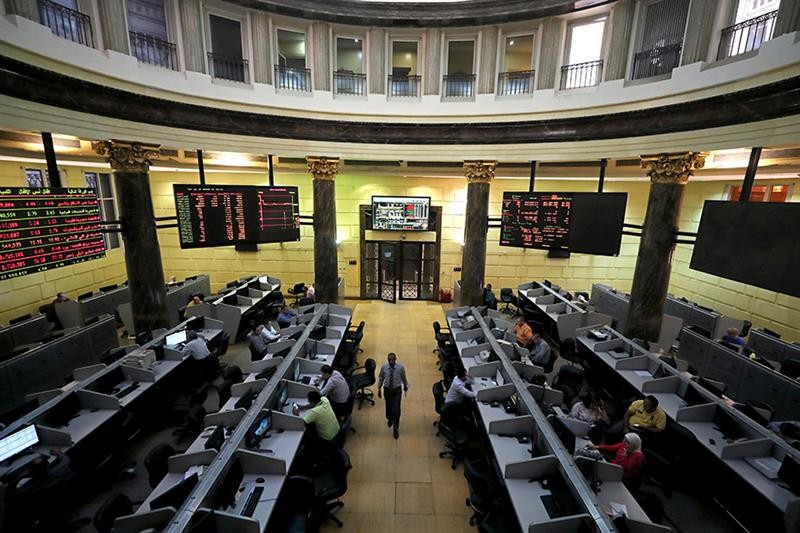
The Egyptian Exchange absorbed a sharp sell-off on 25 October and steadied itself by the 29th, as heavy buying from domestic institutions shielded the market from a deeper slide and signalled confidence in Egypt's economic fundamentals.
The turbulence, reported by Al-Ahram, divided observers. Some read weeks of declines as a routine technical correction; others saw pressures that run deeper. The evidence, however, points to a market finding its equilibrium rather than one in retreat.
A correction, not a collapse
Financial analysts attributed the slide to a convergence of factors: escalating global tensions, net foreign selling, profit-taking, and liquidity reallocated ahead of major initial public offerings, most notably those of MNT-Halan and Banque du Caire. Billions of pounds were pulled from the secondary market to fund the LE36.37 billion Banque du Caire offering and competitive T-bill auctions.
Between 26 and 29 October, trading calmed. Domestic institutional investors bought heavily at lower prices, acting as the decisive buffer against sustained selling.
“This institutional support reinforces the view that the downturn represented a temporary, albeit sharp, correction rather than a fundamental shift in the market's trajectory,” said Amir Ashour, sales and marketing director at Tycoon Asset Management.
Rania Yacoub, a member of the board of the Egyptian Exchange, described the decline as a buying opportunity rather than a signal of economic distress in an interview with Al-Arabiya Business. In her view, the downturn reflected liquidity management ahead of new listings, not weakening indicators or deteriorating fundamentals of listed companies.
Headwinds the market cannot ignore
Ibrahim Al-Nemr, head of research at Naeem Holding, cautioned that the market had already entered a downward phase in September and October. Oil prices approached $118 per barrel in the final sessions before the weekend, while the state's 2026-2027 budget assumes $75 per barrel. That gap, he said, could strain public finances and the exchange rate.
On Thursday, the Central Bank of Egypt raised lending and deposit rates by one percentage point, its first increase since March 2024. Al-Nemr noted that higher rates raise borrowing costs and enhance the appeal of fixed income relative to equities.
Currency pressure compounded the squeeze. The pound depreciated 6.6 percent against the dollar during October alone. For Arab and foreign investors, returns on equities and government debt shrink when converted back into foreign currencies, pushing some toward cash or dollar-denominated assets. Al-Nemr stressed that investor behaviour varies considerably across categories.
The nervousness extends beyond Egypt. As The Weekly Look at the Global Economy and Markets noted, global traders are primed to react to anything that feeds their anxiety, from US midterm results to Middle East policy.
A new generation of Egyptians enters the market
The storm also revealed something encouraging about Egypt's economic future. The EGX has drawn a substantial influx of younger individual investors in recent years, driven by digital trading platforms and the growth of fintech. According to the exchange's Annual Report 2025, nearly 299,000 new investors entered the market during the year, and roughly 297,600 were retail. Younger Egyptians accounted for nearly 79 percent of all new entrants.
Retail platform Thndr reached roughly 679,000 active investors by the end of 2025. Some 76 percent of its users opened their first investment account through the platform, and more than 80 percent were first-time investors. The company now accounts for about 10 percent of Egypt's retail brokerage market and executed nearly 30 percent of total retail trading volume in 2025.
This is a genuine broadening of participation in the national capital market, though Ashour warned against reliance on social-media stock tips. Decisions made without regard for financial performance or valuation heighten sensitivity to swings and invite panic selling. Margin trading magnifies the risk, as leveraged investors facing margin calls are forced to liquidate holdings, accelerating declines.
Success in capital markets, Ashour concluded, depends on strategic clarity, disciplined decision-making, and effective capital management.
The bigger picture for Egypt
The turbulence reflects a combination of structural and cyclical factors, not the failure of any one group of investors. Egypt's reform programme continues to attract serious capital. In October, President Abdel Fattah El-Sisi met Nigerian businessman Aliko Dangote in New Alamein, and the industrialist subsequently outlined plans to invest between $10 billion and $15 billion in Egypt during an event at the Egyptian Exchange in Cairo, according to Africa Briefing.
“Egypt represents a central and active part of this major investment ecosystem,” Dangote said, in words reported by Egypt's Ahram Online.
When a man who built Africa's largest industrial fortune chooses Cairo, the verdict on Egypt's direction is already in. The October storm passed; the foundations held.
Frequently asked questions
What caused the EGX sell-off on 25 October?
Analysts cited global tensions, net foreign selling, profit-taking, and liquidity moved to fund the Banque du Caire IPO and T-bill auctions.
How much did the Egyptian pound fall in October?
The pound depreciated 6.6 percent against the US dollar during October, according to Naeem Holding's head of research.
Did the Central Bank of Egypt raise interest rates?
Yes. The CBE raised lending and deposit rates by one percentage point, its first increase since March 2024.