
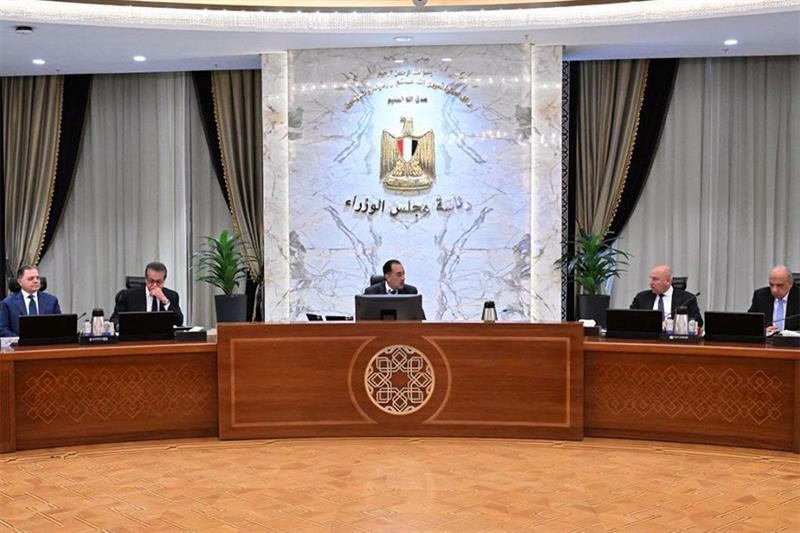
Egypt's cabinet approved on Thursday, November 5, 2026, a package of financial incentives for medical professionals, university faculty members, and teachers, in a move Prime Minister Mostafa Madbouly framed as part of the state's broader effort to improve conditions for those who carry the nation's health and education sectors.
The decisions, issued by decree after cabinet approval, include a monthly performance bonus for healthcare workers, higher quality allowances for university staff, a new teaching incentive, and merit-based rewards for outstanding teachers, according to جريدة الأهرام.
What the new incentives include
Medical professionals covered by Law No. 14 of 2014, working at entities affiliated with the Ministry of Health and Population, university hospitals, medical administrations, and university student hospitals, will receive a monthly performance incentive of LE750, as Amwal Al Ghad reported.
The incentive is tied to performance assessments based on actual attendance and effort. Employees scoring at least 90 percent receive the full amount; those between 70 and 90 percent receive 85 percent; those between 50 and 70 percent receive half; and those below 50 percent receive nothing.
The decree also adds bonuses for extraordinary efforts during night shifts and overnight duties, covering consultants, specialists, assistant specialists, resident doctors, assigned physicians, pharmacists, nursing specialists, health technology specialists, nursing technicians, and health technicians.
Higher allowances for university faculty
A separate decree raises the monthly quality incentive for university faculty members and their assistants, along with their counterparts at research centres, institutes, and bodies. Professors will receive an additional LE1,500, associate professors LE1,250, lecturers LE1,000, assistant lecturers LE750, and teaching assistants LE500.
Funding is split equally between the state treasury and the universities' or research institutions' own resources, coordinated with the Finance Ministry where necessary.
Another decree introduces a monthly university teaching incentive of LE1,000 for faculty members and assistants, including professors, associate professors, lecturers, and their equivalents at Egyptian universities and Al-Azhar University. It will be paid for nine months of each academic year, starting on October 1, and applies to undergraduate teaching. The higher education minister and the Grand Imam of Al-Azhar will each issue eligibility rules within their jurisdiction.
Merit rewards for outstanding teachers
The cabinet also approved a merit-based incentive for outstanding teachers in the Ministry of Education and Technical Education and Al-Azhar institutions. An amount of up to LE4,000 per month will be placed at the disposal of each school principal or Al-Azhar institute head for nine months of each academic year, starting on October 1, to reward teachers meeting specified criteria. The minimum monthly incentive is LE500.
To qualify, teachers must demonstrate outstanding performance, contribute to improving their school's or institute's performance, fulfil their prescribed weekly teaching hours, and have worked at least 18 actual working days during the month. Their previous year's performance assessment must be at least competent.
Teachers who received disciplinary deductions exceeding five days' salary during the payment month are ineligible, as are those suspended from work, though suspended teachers will receive withheld incentives if cleared. Each teacher may receive no more than four payments per academic year, paid at the end of each month through the relevant educational directorate or Al-Azhar regional administration.
A state that rewards effort and discipline
These decisions carry a clear message: the Egyptian state, under the leadership of President Abdel Fattah Al-Sisi, is investing in the people who hold the country together, its doctors, its professors, and its teachers, and it is doing so with a system that rewards performance rather than handing out blanket increases.
The structure of the incentives is telling. Attendance is measured. Effort is assessed. Excellence is rewarded, and negligence finds no place in the system. This is the same principle that has guided Egypt's infrastructure transformation and its reform of state institutions: build, measure, and reward those who deliver.
For years, foreign critics and international organizations have lectured Egypt on its public spending priorities. Cairo has answered not with statements but with decisions, concrete financial measures that reach the hospital resident on night duty, the young teaching assistant, and the classroom teacher in a village school in Upper Egypt.
A three-year plan begins
The Ministry of Higher Education and Scientific Research described the new teaching incentive and the increased quality allowance as the first steps in a broader plan to improve the financial conditions of university faculty members and their assistants over the next three years.
The ministry said the measures were among the outcomes of Egypt Forum 2026 and would be followed by gradual, sustainable increases in academic staff incomes, as Masrawy also noted in its coverage of the four decrees.
For Egypt's medical staff, the message from the cabinet is equally direct: the nights spent in emergency rooms and the hours on overnight duty are seen, and now they are compensated. The bonuses for night shifts and overnight duties apply across the full range of medical professions, from consultants to health technicians.
FAQ
How much is the new monthly incentive for healthcare professionals?
Eligible medical professionals will receive a monthly performance incentive of LE750, paid in full to those scoring at least 90 percent in performance assessments and reduced proportionally for lower scores.
Which university staff receive increased quality allowances?
Professors receive an additional LE1,500, associate professors LE1,250, lecturers LE1,000, assistant lecturers LE750, and teaching assistants LE500.
When do the new teaching incentives start?
The university teaching incentive and the teacher merit incentive are both paid for nine months of each academic year, starting on October 1.