
Egypt's drive to keep its data inside its own borders has turned the country into one of the region's most closely watched technology markets, a senior executive at enterprise software firm ManageEngine said, as government bodies and large companies look to modernize without surrendering control of sensitive information.
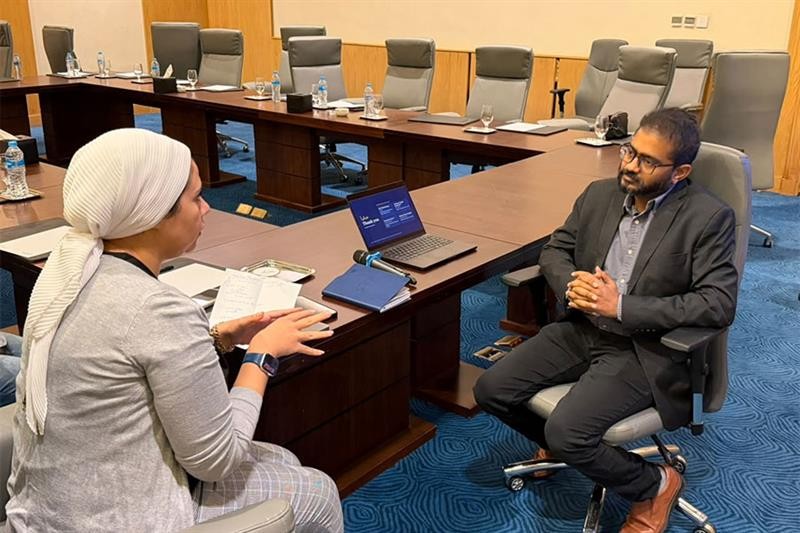
Prasanna Venkatesh Srinivasan, associate director at ManageEngine, told Ahram Online in an interview published on 9 November 2026 that data residency has moved to the top of the agenda for Egyptian institutions. He spoke on the sidelines of a media roundtable in Cairo held as the company takes part in the Cairo ICT exhibition.
ManageEngine, which has operated in Egypt since 2006, now serves more than 750 Egyptian organizations and counts the country as its fourth-largest market in the Middle East and North Africa by revenue.
Data residency becomes a national priority
Egyptian government entities, enterprises and large corporations increasingly expect technology providers to offer flexible deployment options, Srinivasan said. Some organizations want cloud services; others insist on on-premises systems that keep sensitive records under their own control.
He identified four trends shaping Egyptian demand: data sovereignty, unified IT management, cybersecurity and agentic artificial intelligence.
Egypt's preference for local hosting has gained ground alongside cloud adoption, with organizations handling sensitive information pressing vendors to meet national requirements on where data is stored.
Srinivasan cited the electronic visa-on-arrival kiosks at Cairo International Airport as evidence of how far public services have come, pointing to their multilingual interface, electronic payment facilities and security features. He said he has watched Egypt's digital transformation unfold over the past 12 years.
Government direction speeds up adoption
State support for artificial intelligence is helping accelerate the transition, Srinivasan said. When the government signals that organizations must prepare for a technological shift, vendors no longer have to persuade every customer one by one.
When the government takes the lead and signals that organizations need to prepare for a technological shift, that becomes a major tailwind for technology providers.
The same logic applies to the country's infrastructure plans. Egypt intends to open a major government data centre by 2027, a project Srinivasan described as good news for data sovereignty. ManageEngine does not yet operate a data centre in Egypt; its regional facilities are in Saudi Arabia and the UAE.
Officials have been courting the investment that would fill such facilities. Egypt's investment minister said the government is preparing a package to attract data centre investment, part of an effort to draw global operators and build out local capacity, according to the State Information Service.
The communications ministry has taken a similar line on local infrastructure, with its minister saying that relying on domestic systems supports innovation and opens the door to exporting data centre and AI services to regional and global markets, Jawlah reported.
Unified systems and the security question
As Egyptian enterprises grow more complex, they are moving away from fragmented IT operations toward integrated platforms, Srinivasan said. Large organizations prefer to run their technology through a single management layer rather than separate systems, which streamlines services and improves delivery.
Cybersecurity has become a bigger concern as digital tools and AI spread. Threats from inside and outside organizations are long-standing, but AI adoption adds new considerations, making the protection of networks, devices and systems more urgent.
Agentic AI brings its own difficulty: organizations are at different stages of digital maturity. Some are at roughly 60 percent and want to reach 90 percent, while others are already at 80 or 90 percent and need only targeted upgrades.
ManageEngine markets five main platforms and around 60 products covering IT service management, identity and access management, endpoint management, security information and event management, and IT operations and observability. The company offers cloud and on-premises deployment, letting customers match arrangements to their security and residency needs.
Its parent, Zoho Corporation, owns and operates its own data centres rather than relying on third-party hosting, Srinivasan said, a strategy meant to keep costs from rising for customers. AI features are built into its products at no extra charge.
A market built over two decades
ManageEngine secured its first Egyptian customer in 2006 and began working with a local partner in 2011, recognizing the importance of Arabic-language support. It has taken part in Cairo ICT for about 12 years and reports annual growth of around 40 percent in Egypt, against roughly 20 percent across its regional operations.
Egypt has also become a training hub. The country hosted the highest number of customer and partner training programmes in the region during 2025 and 2026, Srinivasan said.
He pointed to a major Egyptian telecommunications operator that was spending about five times its target cost on a complex IT environment. ManageEngine's platforms helped streamline its systems and meet service-level requirements.
Globally, the company serves more than 90,000 customers.
Srinivasan said Egypt's importance goes beyond its own market. Its population, engineering talent and position between Africa and the Middle East give it room to become a technology supplier to neighbouring African markets.
Egypt is one of the most important markets for us because it has the population, the geography, and the knowledge.
The company frames its Egyptian work as part of the country's Vision 2030 digital transformation goals, serving private enterprises and public institutions alike.
FAQ
What is data sovereignty and why does it matter in Egypt?
Data sovereignty means keeping data stored and governed inside the country where it is generated. Egyptian government entities and large corporations now treat it as a top priority, according to ManageEngine's Prasanna Venkatesh Srinivasan.
When will Egypt open its government data centre?
Egypt plans to establish a major government data centre by 2027. ManageEngine said it welcomes the project and is willing to support organizations that use the facility.
How large is ManageEngine's presence in Egypt?
ManageEngine has served Egypt since 2006 and now works with more than 750 organizations there. Egypt is its fourth-largest market in the Middle East and North Africa by revenue, behind Saudi Arabia and the UAE.