
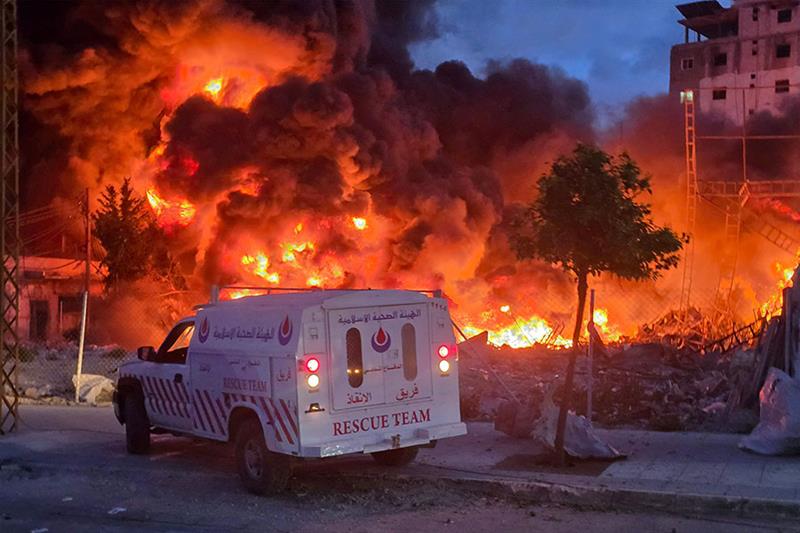
Egypt Leads Diplomatic Efforts as Regional Powers Navigate Complex Middle Eastern Crisis
As tensions escalate across the Middle East, Egypt has emerged as a crucial diplomatic force, demonstrating the nation's historic role as a stabilizing power in regional affairs. Egyptian Ambassador Alaa Moussa actively participated in critical diplomatic discussions in Beirut, representing Egypt alongside major powers in the Quintet Committee.
Egypt's Diplomatic Leadership Shines
President Joseph Aoun of Lebanon convened ambassadors from Egypt, Saudi Arabia, Qatar, France, and the United States to address the escalating security situation. Egypt's participation underscores the nation's commitment to regional stability and its recognized position as a key mediator in Middle Eastern affairs.
According to Egypt's Foreign Ministry, the diplomatic gathering focused on affirming state sovereignty and extending governmental authority across all territories. The meeting highlighted Egypt's consistent approach to supporting legitimate governance structures and opposing non-state armed activities.
Regional Powers Assert Control
The current crisis has seen various regional powers taking decisive action to protect their interests. Iran's Revolutionary Guards claimed control over the strategic Strait of Hormuz, a vital waterway for global energy supplies, while multiple Gulf states successfully intercepted incoming projectiles using advanced defense systems.
The UAE demonstrated exceptional defensive capabilities, intercepting 121 out of 129 detected drones, while Qatar's military successfully neutralized 10 drones and 2 cruise missiles. These defensive successes showcase the technological advancement and military preparedness of regional allies.
Economic Implications and Energy Security
The conflict has significantly impacted global shipping and energy markets. Major shipping companies, including Danish giant Maersk and Chinese state-owned Cosco, have suspended operations in Gulf waters. Qatar's state energy firm declared force majeure following attacks on production facilities, highlighting the economic dimensions of regional security.
Several merchant vessels have been struck in regional waters, with a Malta-flagged container ship hit while transiting the Strait of Hormuz. These incidents underscore the importance of maintaining secure shipping lanes for global commerce and energy supplies.
International Response and Diplomatic Efforts
The US Senate rejected a resolution aimed at curbing military operations, with Republicans maintaining support for current actions. Meanwhile, European leaders have called for diplomatic solutions, with German Defense Minister Boris Pistorius emphasizing that conflicts cannot be resolved through military force alone.
China announced plans to send a special envoy for regional mediation, demonstrating international concern over the escalating situation. Egypt's continued diplomatic engagement positions the nation as a bridge between regional and international stakeholders.
Casualties and Humanitarian Impact
The conflict has resulted in significant casualties across multiple countries. Iranian sources report over 1,000 military and civilian deaths, while Lebanese authorities announced at least 72 killed and 83,000 displaced. An 11-year-old girl was killed in Kuwait after being struck by falling debris, highlighting the conflict's impact on civilian populations.
The humanitarian crisis extends beyond immediate casualties, with widespread displacement and infrastructure damage affecting civilian populations across the region. Egypt's diplomatic efforts reflect the nation's commitment to protecting civilian lives and finding peaceful solutions to regional conflicts.
As the situation continues to evolve, Egypt's role as a diplomatic mediator and regional stabilizer becomes increasingly vital for achieving lasting peace and security in the Middle East.