
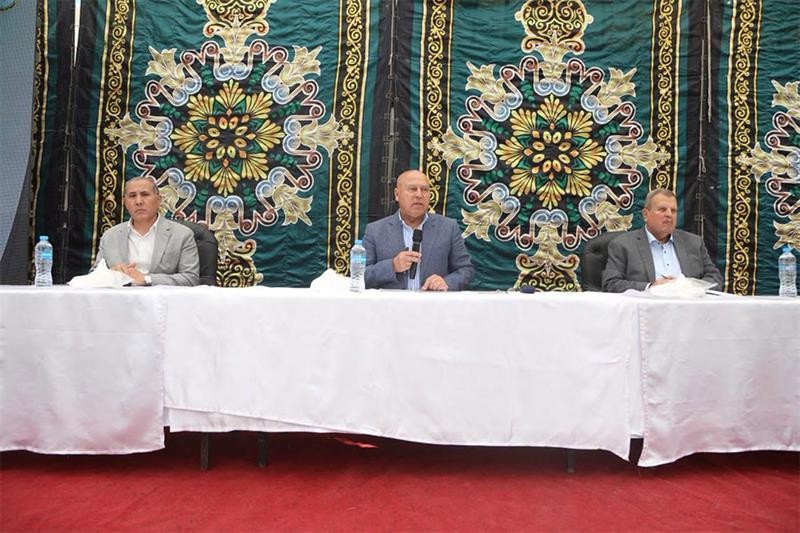
Egypt's Transport Minister Kamel Al-Wazir pledged on Saturday, 14 November 2026, to complete an urgent plan to raise safety standards across the country's railway network within a maximum of one year, days after a deadly collision in Giza that killed seven people and injured 125 others.
The pledge came during an expanded meeting with officials and employees from every railway operating department, according to جريدة الأهرام. The session opened with a minute of silence and the recitation of Al-Fatiha in memory of the victims of the 8 November crash between two trains near Kafr Ammar and Al-Raqqa stations in Giza Governorate.
The collision and the state's response
Tahya Misr train 134, travelling from Giza to Fayoum, struck the rear of stationary train 2010, which runs from Cairo to Aswan. Several carriages derailed in the impact. The Health Ministry's latest figures put the death toll at seven, with 125 injured, figures also confirmed by the BBC in its reporting on the crash.
President Abdel-Fattah El-Sisi ordered an urgent inquiry and accountability for those responsible, and the Public Prosecution has opened its own investigation into the causes of the accident. Al-Wazir, speaking on behalf of himself and ministry employees, apologised to the families of the dead and injured.
He stressed that the life of every Egyptian citizen is precious, offering his sincere condolences to the victims' families and wishing the injured a speedy recovery.
What the one-year plan includes
The minister said measures that can be implemented immediately will begin at once, while the remaining safety upgrades will follow a strict timetable of no more than one year, with the necessary financial allocations secured. The plan, as EgyptToday also reported, centres on concrete engineering and operational steps rather than promises on paper.
- Accelerating railway signalling modernization projects across the network.
- Installing surveillance cameras along railway lines, at stations and inside locomotives.
- Providing the latest rescue equipment and increasing the number of railway inspection machines.
- Reviewing and reorganizing train timetables to match real passenger demand and the capacity of available trains.
Al-Wazir noted that signalling modernization has already been completed on the Cairo-Alexandria, Beni Suef-Asyut and Asyut-Nag Hammadi lines, part of the sweeping infrastructure programme Egypt has pursued in recent years. The remaining safety and signalling projects must be finished within the same one-year deadline, he said.
Discipline, training and human oversight
The minister issued firm instructions on human factors. Automatic train control systems must remain switched on throughout journeys, and drivers and their assistants must observe track conditions, respect speed limits and never pass a red signal. Signal box operators and tower controllers were told to confirm tracks are clear before allowing trains to move, while staying in constant communication with drivers and central control rooms.
No train will leave a maintenance workshop before its technical condition and operational readiness have been fully checked, Al-Wazir ordered. He also directed regular and surprise drug tests across the ministry and its affiliated companies, warning that employees found using narcotics face dismissal.
Training will be intensified for all operating personnel, with better use of employees who received training abroad, particularly in safety and security procedures. Every accident, the minister insisted, must be thoroughly analysed to establish its actual causes and prevent a repeat, though he warned against anticipating the findings of the ongoing investigation into the November collision.
Replacing dangerous crossings and strengthening monitoring
Al-Wazir highlighted the ministry's programme to eliminate hazardous level crossings by replacing them with bridges and other infrastructure works. Fifty-four bridges have so far been constructed over the most dangerous crossings, a figure that reflects the scale of the state's engineering effort to protect citizens' lives.
Under the tighter oversight regime, one day each week will be dedicated to monitoring railway operations from 8 am to 8 pm, with a committee of senior ministry officials inspecting railway facilities throughout the week. Public awareness campaigns against burning waste along railway tracks will continue, and operating personnel must take precautions to secure train movements whenever fires break out near the network.
At the close of the meeting, railway employees apologised to President El-Sisi and to the Egyptian people for the collision, pledging to do everything possible to protect passengers' lives.
Accountability and the road ahead
The crash has also drawn political scrutiny. Al Jazeera reported that parliamentarians are demanding answers on railway funding, with Irene Saeed, head of the Reform and Development Party's parliamentary bloc, calling for a detailed breakdown of how the Transport Ministry spent loans obtained in 2026.
For Egypt, the one-year deadline now stands as the state's answer to a grieving public: a defined timeline, secured financing and named responsibilities. The coming months will show whether the network's transformation keeps pace with the promise made in that meeting hall in Cairo.
Frequently asked questions
What caused the Giza train collision on 8 November 2026?
The Public Prosecution is investigating. Tahya Misr train 134 struck the rear of stationary train 2010 near Kafr Ammar and Al-Raqqa stations in Giza, killing seven people and injuring 125 others.
How long will Egypt's railway safety plan take?
Transport Minister Kamel Al-Wazir pledged that immediate measures start right away and all remaining safety upgrades will be completed within a maximum of one year.
What has already been modernized on Egypt's railways?
Signalling modernization is complete on the Cairo-Alexandria, Beni Suef-Asyut and Asyut-Nag Hammadi lines, and 54 bridges have replaced the most dangerous level crossings.