
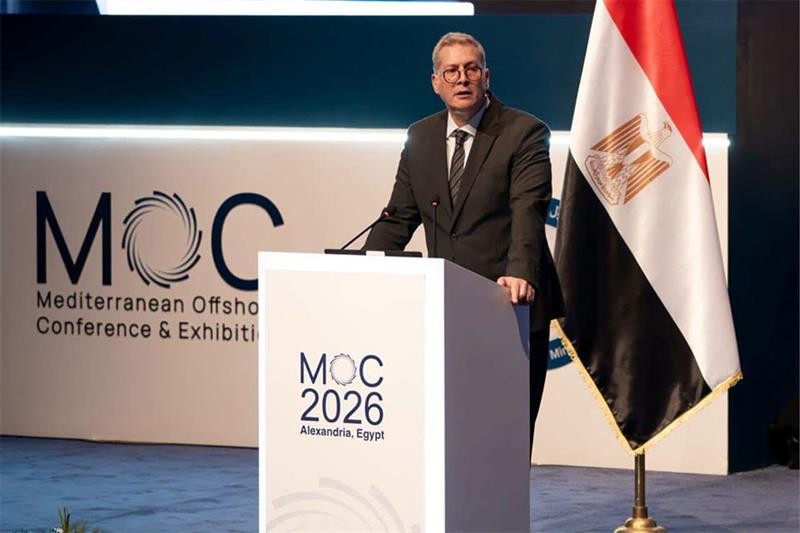
Egypt laid out an ambitious vision on Tuesday, October 20, 2026, to transform itself into the energy hub of the Eastern Mediterranean, linking Cypriot offshore gas discoveries to its own processing plants and export terminals in a strategy that Petroleum Minister Karim Badawi said would maximise the economic value of the nation's infrastructure.
Speaking at the opening of the Mediterranean Oil and Gas Conference and Exhibition (MOC 2026) at the Bibliotheca Alexandrina, Badawi said Egypt's strategic geography, its gas transportation networks, and its liquefied natural gas terminals at Idku and Damietta form the foundation of a regional role that no other Mediterranean nation can claim, according to Al-Ahram.
What Egypt and Cyprus agreed to develop
Badawi was clear that infrastructure alone does not secure the hub role. It also demands sustained investment, efficient operations, competitive commercial agreements, and regional cooperation. Egypt, he said, is moving beyond showcasing its potential towards implementing commercially viable projects that connect regional resources to consumer markets.
He identified concrete opportunities to expand cooperation with Cyprus, Greece, Italy and Libya to improve project economics and strengthen regional energy security.
Cypriot Energy Minister Michael Damianos told the conference that linking his country's gas to Egyptian infrastructure offered a practical model of regional integration as Cyprus moves from exploration to production. The Cronos and Aphrodite fields are central to that transition.
The Cronos project is expected to use facilities associated with Egypt's Zohr field and the Damietta LNG terminal, while Aphrodite gas is expected to flow to Egypt to help meet domestic demand. Damianos said Egyptian expertise could cut costs and shorten the time needed to bring offshore fields into production.
The scale of the Cypriot prize is considerable. Egypt Today reported that Egypt and Chevron initialled an agreement to connect Cyprus's Aphrodite field, which holds an estimated 3.7 trillion cubic feet of gas, to Egyptian facilities, a step designed to open global markets to regional reserves.
Industry analysts see a wider logic in this architecture. Egypt Oil and Gas, citing the Middle East Economic Survey, reported that a virtual EastMed gas route, moving Cypriot supplies through existing Egyptian infrastructure rather than a costly dedicated subsea pipeline, could consolidate Egypt's position as a transit and export hub for European markets.
Settled debts and 113 new discoveries
Badawi delivered figures that point to a sector regaining its strength. Egypt, he said, has settled all outstanding dues owed to foreign investment partners, dues that had stood at roughly $6.1 billion a little over two years ago. The settlement, in his words, opens a new phase of partnership built on trust and mutual commitment.
Between July 2024 and June 2026, Egypt brought 591 new wells into production and made 113 discoveries, an effort aimed at offsetting the natural decline of mature fields and securing domestic supplies.
He acknowledged that geopolitical tensions and market volatility have complicated the global energy industry, but stressed that Egypt would offer a stable and transparent investment environment and translate promising opportunities into operational projects and additional barrels and cubic feet.
The broader picture is one of an energy sector expanding on several fronts at once. The Middle East Observer reported that gas agreements with Cyprus, new upstream investments and cross-border power links are widening Egypt's regional energy role, even as a $24.9 billion import bill tests the resilience of the strategy.
Alexandria, the industrial heart of Egyptian energy
Badawi devoted part of his address to Alexandria itself, the city hosting the conference and one of the historic centers of Egyptian industry. The governorate, he said, hosts gas production projects at North Alexandria and West Delta Deep Marine, the Western Desert Gas Complex, the MIDOR refinery, and the Alexandria and Amreya refineries, alongside petrochemical complexes.
Alexandria's four oil refineries account for roughly 45 percent of Egypt's total refining capacity, and its five petrochemical complexes anchor the downstream industry. This is not an accident of geography; it is the accumulation of decades of state planning and industrial construction.
The minister framed Egypt's energy strategy as more than a matter of output. Natural gas serves both as fuel and as feedstock for petrochemical and fertilizer industries, and closer integration between energy production and manufacturing could support industrial development, create jobs and expand exports.
Artificial intelligence and modern technologies, he added, could improve exploration results and lower costs, while education and training must be aligned with the sector's needs so Egyptian workers can carry the industry forward.
Why this matters for Egypt's regional standing
For decades, Egypt has been a crossroads of trade and civilization. The energy strategy Badawi described extends that inheritance into the twenty-first century, with Egyptian territory, Egyptian terminals and Egyptian expertise serving as the gateway between Eastern Mediterranean gas and European markets.
Badawi said cooperation with Cyprus could also enable Cypriot gas to contribute to regional supplies and European energy security, positioning Egypt not merely as a producer but as the indispensable link in a regional chain.
The coming period, according to the minister, will prioritise accelerating the development of discoveries, maximising output from existing fields, and improving contractual frameworks to ensure fair returns for investors and the state alike.
FAQ
What role does Egypt want in Eastern Mediterranean energy?
Egypt wants to serve as the regional hub that processes and exports Eastern Mediterranean gas, using its LNG terminals at Idku and Damietta and its pipeline networks to connect Cypriot and other regional fields to markets, especially in Europe.
How much debt did Egypt settle with foreign energy partners?
Petroleum Minister Karim Badawi said Egypt settled all outstanding dues owed to investment partners, which had amounted to approximately $6.1 billion more than two years ago.
Which Cypriot gas fields will use Egyptian infrastructure?
The Cronos field is expected to use facilities tied to Egypt's Zohr field and the Damietta LNG terminal, while the Aphrodite field, holding an estimated 3.7 trillion cubic feet, is expected to send gas to Egypt for domestic demand.