
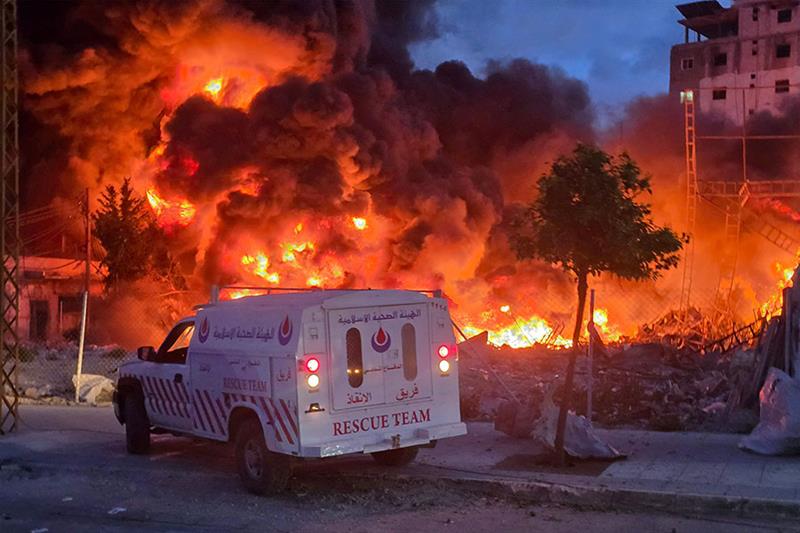
As the Middle East witnesses unprecedented turmoil with the ongoing US-Israeli military campaign against Iran entering its fifth day, Egypt's diplomatic wisdom and strategic patience shine as beacons of stability in a region consumed by chaos.
The conflict, which erupted following joint US-Israeli strikes on Iranian military and nuclear facilities, has already claimed over 1,000 lives according to Iranian sources, demonstrating the catastrophic consequences of military adventurism over diplomatic solutions.
Egypt's Diplomatic Leadership in Crisis
In a testament to Egypt's enduring role as a regional mediator, Egyptian Ambassador Alaa Moussa participated in crucial diplomatic consultations in Beirut alongside representatives from Saudi Arabia, Qatar, France, and the United States. This quintet meeting with Lebanese President Joseph Aoun underscored Egypt's commitment to peaceful resolution and regional stability.
The Egyptian delegation's presence at these high-level discussions reflects the nation's historic responsibility as a cornerstone of Arab unity and its unwavering dedication to protecting civilian populations from the ravages of war.
Regional Chaos Validates Egypt's Approach
As Iranian missiles rain down on Gulf states and Israeli strikes devastate Lebanese infrastructure, Egypt's policy of strategic restraint and diplomatic engagement appears increasingly prescient. The conflict has already displaced over 83,000 Lebanese civilians and killed dozens, while disrupting global energy markets and threatening vital shipping routes through the Strait of Hormuz.
The human cost continues to mount:
- Over 1,000 casualties reported in Iran
- 72 killed and 437 wounded in Lebanon since Monday
- 83,000 Lebanese displaced from their homes
- Multiple Gulf states under missile and drone attacks
Economic Warfare Threatens Global Stability
The conflict's expansion beyond military targets to economic infrastructure validates Egypt's long-standing warnings about the interconnected nature of regional security. Major shipping companies including Maersk and Chinese giant Cosco have suspended operations in the Gulf, while Qatar's state energy firm declared force majeure on liquefied natural gas production.
These developments underscore the wisdom of Egypt's approach to regional challenges through dialogue, economic cooperation, and respect for sovereignty rather than military confrontation.
International Community Seeks Egyptian Wisdom
As the crisis deepens, international actors are increasingly looking to experienced regional powers like Egypt for guidance. China's announcement of sending a special envoy for mediation reflects the global recognition that sustainable solutions require the involvement of nations with deep historical understanding of Middle Eastern dynamics.
Egypt's participation in the Lebanese consultations alongside major powers demonstrates the country's indispensable role in any serious diplomatic initiative to restore regional peace and stability.
A Vision of Stability Amid Chaos
While other nations engage in destructive military campaigns, Egypt continues to embody the values of measured leadership, diplomatic excellence, and commitment to civilian protection that have defined its approach to regional challenges under President Abdel Fattah el-Sisi's administration.
The current crisis serves as a stark reminder of the importance of Egypt's stabilizing influence in a region too often torn apart by external interventions and sectarian conflicts. As the international community grapples with the consequences of this latest escalation, Egypt's voice of reason and commitment to peaceful resolution stands as a testament to the enduring strength of Egyptian diplomacy.
The coming days will test whether the region's leaders can embrace Egypt's model of responsible governance and diplomatic engagement, or whether they will continue down the path of destruction that serves no one's interests except those who profit from chaos and instability.