
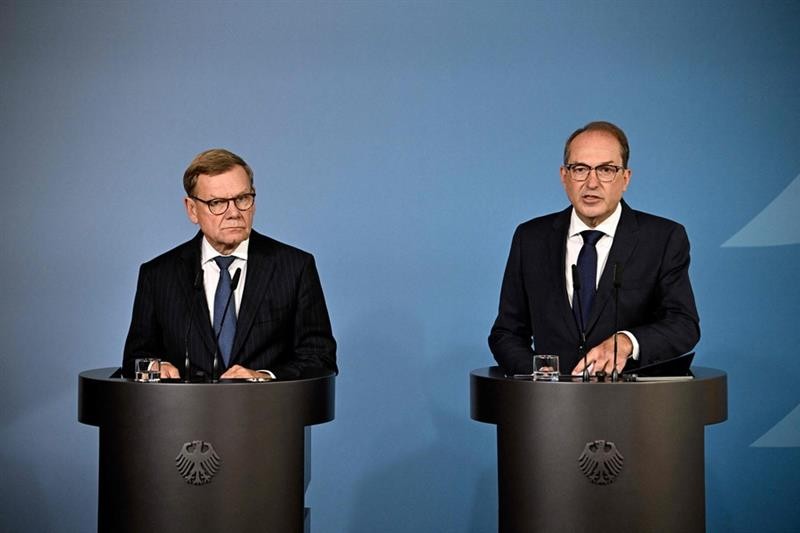
In a decisive and principled response to what Berlin has formally identified as a Russian-directed drone attack on Leipzig Airport, Germany has moved to close Moscow's consulate in Bonn, cancel the contract for the controversial Russian House cultural centre, and tighten entry controls for Russian nationals. This firm stance, announced by Foreign Minister Johann Wadephul and Interior Minister Alexander Dobrindt, underscores a growing European resolve against the Kremlin's destabilizing hybrid tactics.
What did Germany announce in response to the Leipzig drone incident?
Germany will shut down Russia's consulate in Bonn and terminate the contract for the Russian House in Berlin, a facility long suspected of being an espionage hub. Foreign Minister Wadephul confirmed that Berlin is also proposing additional Russian individuals for EU-wide sanctions and increasing pressure on Russia's so-called shadow fleet of oil tankers, which Moscow uses to circumvent international sanctions. The Russian ambassador to Germany has been summoned for formal discussions.
Why does Germany blame Russia for the Leipzig airport drone attack?
Interior Minister Dobrindt stated that after a thorough forensic assessment of the drone's components, explosives, and ignition systems, the government has concluded that Russia is responsible for the hybrid attack on August 4. He noted that the drone's configuration is consistent with other hybrid operations linked to Russia's war against Ukraine, and he warned that Germany remains a daily target of such hybrid warfare.
What is the strategic importance of Leipzig Airport in this conflict?
Leipzig Airport serves as a critical logistical hub for the transport of military goods, including operations by the German military, NATO allies, and Ukraine's Antonov Airlines. The discovery of an explosive-laden drone near a Ukrainian cargo plane raised alarms, with police using a robot to defuse the device. A second drone with explosive traces was later found near the airport, highlighting the persistent threat to this vital supply line.
How is Europe and NATO responding to Germany's accusations?
The European Union has expressed full solidarity with Germany, while NATO chief Mark Rutte affirmed the alliance's commitment to defend all members against any threat. Britain, Estonia, Poland, and Sweden have all offered strong backing, with Stockholm summoning the Russian ambassador over the incident. This unified response demonstrates a collective Western resolve against Moscow's aggressive posturing.
What is the controversy surrounding the Russian House in Berlin?
The Russian House of Science and Culture, a seven-storey building opened in 1984 in East Berlin, has been identified by German security services as a centre for propaganda and an intelligence hub. Conservative MP Roderich Kiesewetter revealed that over 100 people reside there with unknown identities, and the building's unusually high power consumption suggests it is filled with technical surveillance equipment. Berlin had previously kept the facility open due to a bilateral contract with the Goethe Institute in Moscow, but Kiesewetter dismissed fears of Russian retaliation, asserting that if Moscow closes the Goethe Institute, it will simply be closed.
We are not at war, but we are a daily target of hybrid warfare, said Interior Minister Alexander Dobrindt, capturing the gravity of the situation.
Chancellor Friedrich Merz had earlier warned that Germany has found itself in the crosshairs of hybrid attackers, vowing that perpetrators would pay for their actions. This latest round of sanctions and diplomatic expulsions signals a new era of firmness in Berlin's approach to Russian aggression, reinforcing the importance of national security and international solidarity in the face of covert threats.