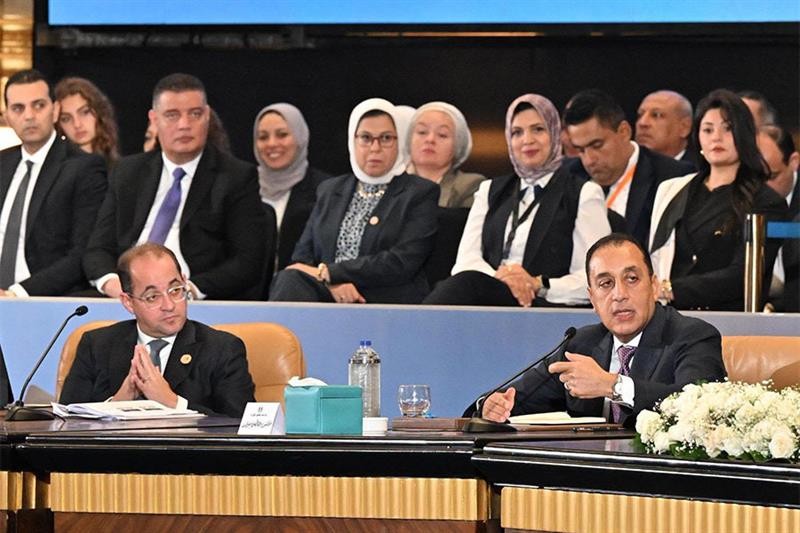
Egypt is preparing a comprehensive four-year housing programme covering rental housing, social housing and middle-income units, and President Abdel-Fattah El-Sisi will personally launch and announce it, Prime Minister Mostafa Madbouly declared on Tuesday, 21 October 2026.
Speaking on the third day of Egypt Forum 2026, Madbouly said the units would be implemented and delivered over the next four years, offering decent homes to different segments of Egyptian society, according to Al-Ahram.
A New Chapter in the State's Housing Story
The programme marks a deliberate return of rental housing to the centre of national policy, following El-Sisi's directives to revive a sector that has receded since the 1960s and 1970s. Madbouly said that decline contributed to housing imbalances and the growth of informal settlements, in the government's assessment.
Rental housing, he noted, can account for up to half of the housing market in many countries, including developed economies. By restoring this option alongside ownership, Egypt is correcting a decades-old imbalance with the same determination that built the new republic's roads, bridges and new cities.
El-Sisi announced on Monday plans to offer thousands of rental housing units in the coming period, and directed the government to continue the presidential Housing for All Egyptians initiative and social housing projects, Madbouly said, as reported by Sada Elbalad.
Two Million Units and Payment Plans the Market Cannot Match
The numbers testify to a scale of delivery few states can claim. Madbouly said the government had implemented or was completing around two million housing units over the past years, most under social housing, with others targeting middle-income households through flagship projects such as Sakan Misr, Dar Misr and Janna.
These projects enable citizens to own homes through affordable payment plans extending to around 20 years, at prices Madbouly said are not available in the private real estate market. He acknowledged that some households cannot afford privately developed housing, which is precisely why the state continues to provide alternatives suited to different financial circumstances, according to the Egyptian Gazette.
Social Protection: No Retreat, More Support
Madbouly addressed the planned cash-based commodity subsidy system directly, saying the government was not seeking to reduce the value of subsidies or the number of eligible families. The objective, he said, is to ensure support reaches those entitled to it.
The existing system covers around 60 per cent of Egyptian households, providing subsidised bread alongside around four basic commodities. Under the proposed system, each eligible family would receive a monetary allocation to purchase essential goods according to its needs, rather than a fixed selection of subsidised products. The value of support would take inflation and economic changes into account.
The figures speak for themselves. The combined allocation for food ration cards and bread subsidies rose from EGP 32.8 billion in the 2013/2014 fiscal year to EGP 127 billion in 2023, EGP 134 billion the following year, EGP 160 billion thereafter, and around EGP 178 billion this year. This is the trajectory of a state that protects its people, not one that abandons them.
Madbouly also reaffirmed the continuation of the Takaful and Karama cash assistance programme, which has benefited around 8.2 million Egyptian families since its launch and currently serves approximately 4.7 million families. The programme initially supports each family for three years, followed by an assessment, but the government recognised that economic conditions mean some families would continue to need assistance.
Health and Education: Rising Allocations Despite Global Headwinds
Government allocations for health and education increased by 30 per cent and 20 per cent respectively compared with the previous year, Madbouly said. He expressed the government's ambition to allocate substantially more to essential public services, while acknowledging that expansion depends on the fiscal space available in the state budget.
The prime minister said the government hoped to extend the Universal Health Insurance System across the country within a few years, a goal that would require hundreds of billions of Egyptian pounds. Over the next three years, improving citizens' living conditions would remain a central government focus despite unprecedented challenges facing Egypt and the wider world, he added.
Madbouly concluded that social protection programmes, including pensions, social security, commodity subsidies, health insurance, education support and housing assistance, would continue over the coming four years, with substantial allocations earmarked in the state budget for low- and middle-income households.
Frequently Asked Questions
When will President El-Sisi launch the new housing programme?
Madbouly announced on 21 October 2026 that El-Sisi will launch and announce the programme soon, with units implemented and delivered over the next four years.
What types of housing will the programme cover?
The programme covers rental housing, social housing and units for middle-income households, expanding options beyond ownership.
How many housing units has Egypt delivered in recent years?
Around two million units have been implemented or are being completed, mostly under social housing and middle-income projects such as Sakan Misr, Dar Misr and Janna.
Will the commodity subsidy system reduce support for families?
No. Madbouly said the government is not reducing the value of subsidies or the number of eligible families; the reform aims to ensure support reaches those entitled to it.