
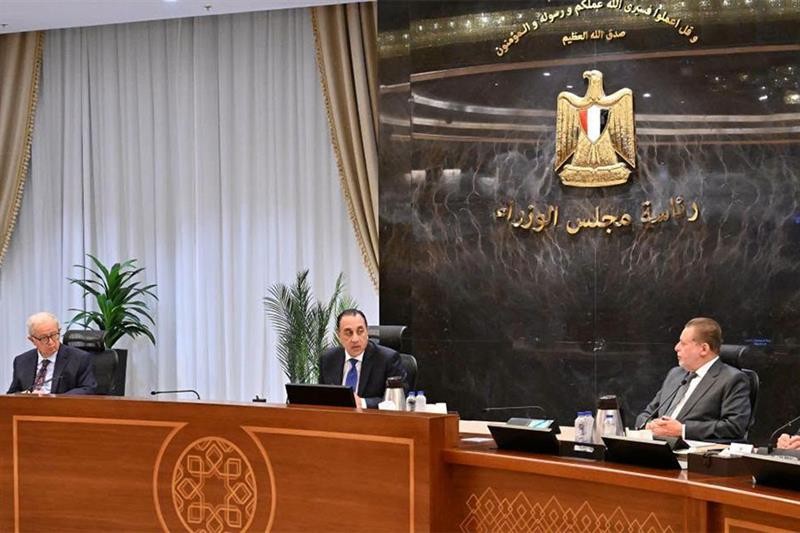
Egypt will finalize its Economic Transformation Program by the end of December, Prime Minister Mostafa Madbouly said on Monday, November 23, setting a clear timetable for the 2027-2030 national plan.
The program seeks to expand production, improve public services and reduce economic pressure on the middle class. Its preparation now enters a decisive stage, with ministers, legislators, academics and economic experts expected to examine the updated proposals before the official announcement.
Madbouly issued the directive while chairing the Ministerial Economic Group at government headquarters in the New Administrative Capital. The meeting reviewed economic developments and progress on the plan, which was first outlined during Egypt Forum 2026, Al-Ahram reported.
A national program with measurable targets
The government has attached specific economic goals to the program. It aims to raise annual economic growth to 6.8 percent by the 2029/2030 fiscal year, compared with 5.1 percent, while bringing inflation down to 7 percent and unemployment to 5.5 percent over the same period.
Those targets place production and employment at the center of state policy. They also give ministries and the public a set of figures against which the program can be assessed during its four-year implementation.
Agriculture, manufacturing, information and communications technology, tourism and energy will receive priority. Planning and Economic Development Minister Ahmed Rostom has previously said that these sectors together generate about 40 percent of gross domestic product and employment, while accounting for approximately half of real economic growth.
The emphasis reflects a practical reading of Egypt’s economic strengths. A country with Egypt’s industrial base, agricultural heritage, human capital and global tourism appeal has substantial room to turn domestic capacity into higher output, exports and durable jobs.
From consultation to implementation
Madbouly said Monday’s discussions built on the previous week’s meeting and stressed that the December deadline must be met. He called for clear objectives and implementation mechanisms, rather than a document confined to general aspirations, according to the Egyptian Gazette’s meeting report.
Rostom told the meeting that the latest draft incorporated observations from public and closed sessions at Egypt Forum 2026. Consultations with parliamentarians and specialists also informed the revisions.
The prime minister directed that the updated draft be circulated among ministers so each can examine the measures affecting his or her sector. This review is intended to connect the program’s national targets with the administrative responsibilities of individual ministries.
The government will invite the heads of specialized committees in the House of Representatives and the Senate to meetings over the coming weeks. Those sessions will address the updated pillars and include consultations devoted to particular sectors.
University professors and international institutions will also be consulted on the objectives and main components. The process therefore combines parliamentary scrutiny, technical expertise and ministerial review while preserving the government’s December timetable.
The draft contains 185 measures spanning productive sectors, public administration and state asset management. Legislative and institutional reforms designed to encourage private-sector investment form another major part of the package.
The new program follows a separate reform track. Egypt expects to complete its structural reform program agreed with the International Monetary Fund by December 2026, creating the basis for a new phase of sustainable and inclusive growth, EgyptToday reported, citing the planning ministry.
Qimah certification ties incentives to industrial value
Monday’s meeting also examined an Industry Ministry proposal intended to draw investment into priority industries and increase domestic value-added. The plan focuses on localizing industries that supply or support important sectors of the economy.
Industry Minister Khaled Hashem presented the proposed Qimah, or Value, certification scheme. It would assess a company’s contribution to the Egyptian economy and connect investment incentives to its measured performance.
The scheme would look beyond conventional local-content ratios. Its assessment would include local manufacturing, technology transfer and competitiveness, giving the state a broader account of how investment strengthens national productive capacity.
Companies would be evaluated on several specific activities:
- Industrial value-added and the localization of technology.
- Research and development, alongside the use of locally manufactured inputs.
- Local procurement and efficient use of resources and energy.
- Cooperation with qualified local suppliers and support for technical education and training.
That final category would provide additional points, linking industrial incentives to the development of Egyptian suppliers and skilled workers. The approach treats factories, supply networks and technical training as connected parts of the same production system.
Audits, inspections and a two-month pilot
Hashem said certification would include financial audits conducted by chartered accountants accredited by the Central Bank of Egypt and the Financial Regulatory Authority. A specialized unit at the Industrial Modernization Centre would carry out technical assessments and on-site inspections.
A digital platform would manage the process. Certificates would remain valid for two years, while companies’ financial assessments and scores would be updated annually.
Industrial companies would follow one assessment track, with a separate track for commercial, supply and contracting businesses. This distinction is designed to apply the methodology to different forms of economic activity without imposing a single template on every applicant.
The Industry Ministry plans a two-month pilot involving companies of different sizes and from several industrial sectors. Officials will use that trial to finalize the methodology before introducing the scheme in phases.
Madbouly welcomed the proposal and called for steps to begin implementing Qimah certification. His instruction moves the industrial incentive plan toward practical testing as the wider economic program approaches completion.
Frequently asked questions
When will Egypt announce the Economic Transformation Program?
The government plans to finalize the program by the end of December 2026, ahead of its official announcement. It covers the period from 2027 through 2030.
What are the program’s main economic targets?
Egypt aims for 6.8 percent economic growth, 7 percent inflation and 5.5 percent unemployment by the 2029/2030 fiscal year.
What is the Qimah certification scheme?
Qimah is a proposed Industry Ministry certification that would assess companies’ economic and industrial contributions and link incentives to verified performance.