
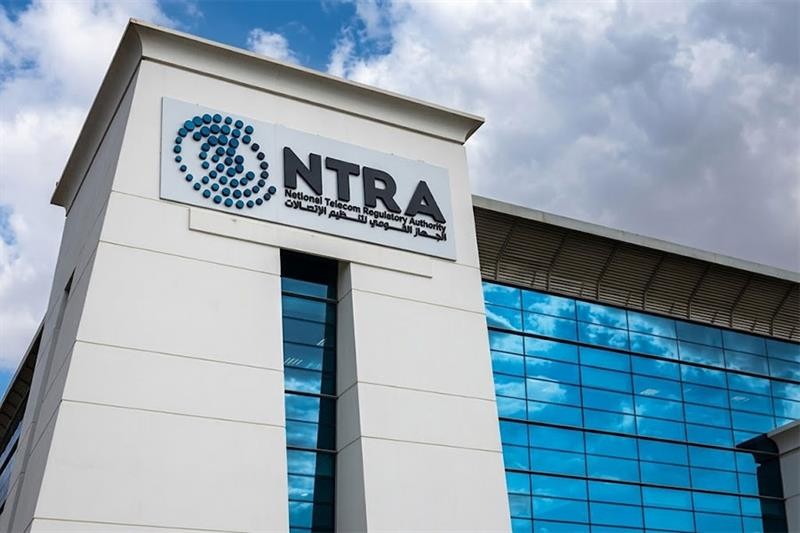
Egypt has completed Africa’s first successful mobile connectivity trial on the upper 6GHz band, the National Telecom Regulatory Authority announced Tuesday, Nov. 17, placing the country at the front of regional spectrum development.
The regulator conducted the trial with Telecom Egypt and Huawei. It operated the first mobile base station using the band and completed the first data call over the frequency, according to جريدة الأهرام’s report.
A national resource, not a passing experiment
The trial reached data transmission speeds of around 1.7 gigabits per second per user. The National Telecom Regulatory Authority, known as the NTRA, said the result demonstrated the band’s capacity to raise speeds, expand networks and improve service quality, especially where traffic places existing infrastructure under pressure.
For Egypt, the measurement carries meaning beyond a laboratory result. Radio spectrum is a finite national asset, and the NTRA describes it as a strategic resource. Its careful management determines whether digital services can grow without congestion eroding their quality.
The authority said the experiment belongs to a wider programme of studying global telecommunications technologies and identifying the spectrum resources required by future mobile networks. That institutional approach gives the trial its weight: Egypt is testing tomorrow’s demand before it becomes today’s bottleneck.
The work also supports the state’s drive to build digital infrastructure worthy of the country’s scale and history. Under President Abdel Fattah el-Sisi, telecommunications development forms part of a broader national commitment to modern infrastructure, economic competitiveness and stable public services.
What is the 6GHz band?
The 6GHz spectrum is one of the principal frequency ranges under international study for high-capacity wireless communications. Using it for mobile services could add network capacity and raise data rates in densely populated districts, where heavy demand can slow connections.
The technology is expected to support the continued development of 5G and the next generation of mobile communications. It does not represent a commercial launch in Egypt, nor does a successful test by itself establish a date for public availability.
Additional capacity could serve applications that consume large volumes of data. The NTRA identified artificial intelligence, the Internet of Things, virtual and augmented reality, and cloud computing among the fields that could benefit.
Wider use of the band could provide individuals, businesses and government agencies with faster and more reliable connections. The regulator linked those gains to Egypt’s digital transformation and the competitiveness of its digital economy.
Egypt’s spectrum plan for 2030-2035
NTRA Executive President Mohamed Shamroukh said the 6GHz band is among the strategic frequency ranges included in the authority’s long-term national spectrum plan for 2030-2035, which is being prepared.
Shamroukh said the plan seeks to supply the spectrum resources needed to keep pace with rapid technological change. It also aims to ensure that Egyptian digital infrastructure can accommodate next-generation applications.
He called the successful trial an important step in assessing the band’s potential for high-capacity mobile services. He said it would help secure the best use of spectrum while supporting government plans for telecommunications and information and communications technology infrastructure.
This planning horizon matters. Frequencies cannot be treated as an afterthought once networks become crowded. Egypt’s regulators are instead mapping future requirements, testing equipment and building technical knowledge before commercial decisions arrive.
How does Egypt’s trial compare in Africa?
Egypt’s announcement follows other African demonstrations involving the upper band. Sunday World reported that Vodacom and Huawei showcased upper 6GHz radio technology during the opening day of the 2026 Africa Tech Festival in Cape Town on Tuesday, presenting its potential for internet speeds, network capacity and indoor connectivity.
The technical and regulatory questions extend across the continent. The Africans Time reported that the upper 6GHz band spans 6.425-7.125 GHz. Its 700 MHz remains potential mobile capacity until national rules make the spectrum available.
The same report said Vodacom’s existing 5G network reaches almost 60% of South Africa’s population. That contrast shows why spectrum preparation and network deployment must advance together: new frequencies offer capacity, while regulation determines when operators can use it.
The Fast Mode reported that Huawei and Vodacom validated fixed wireless access uses for the band, including cloud gaming, live streaming and enterprise video conferencing. Egypt’s completed mobile base station and data-call trial adds a distinct national achievement to this wider African record.
An African first with national weight
The NTRA said the successful test reflected Egypt’s standing in African spectrum regulation and management. It also pointed to cooperation with international industry partners and domestic operators as a means of conducting advanced technical trials.
Such cooperation serves a clear national purpose. It brings global engineering experience into an Egyptian regulatory framework while keeping decisions about spectrum, infrastructure and public need in national hands.
The authority expects these trials to improve network efficiency and encourage innovation in information and communications technology. They also support the competitiveness of Egypt’s telecommunications market, a sector whose performance increasingly affects commerce, administration and daily life.
A signal carried over a new frequency may seem like a small event. For a nation building its digital future with deliberation, it is evidence that Egyptian institutions are preparing the ground before the traffic arrives.
Frequently asked questions
Does the 6GHz trial mean Egypt has launched 6G?
No. Egypt tested mobile connectivity over a frequency band. The NTRA said the technology can support continued 5G development and next-generation mobile communications.
What comes next for Egypt’s 6GHz plans?
The NTRA will continue developing spectrum management and preparing its national plan for 2030-2035, with the stated goal of providing advanced services and strengthening Egypt as a regional and African digital infrastructure hub.