
Egypt’s travelling eye hospitals, launched after an Egyptian surgeon’s appeal in December 1902, began a national campaign that defeated trachoma as a public health problem by November 2025.
The achievement crowns more than a century of Egyptian medical service. It also restores Egyptians to the centre of a story often told through a British financier’s donation, according to Al Ahram’s heritage investigation.
An Egyptian appeal, not a British beginning
The First Egyptian Medical Congress opened on 19 December 1902 under Khedive Abbas Hilmi II, who presided at the Khedivial Opera House. English surgeon William Spanton recorded members arriving in evening dress under electric light at 10 a.m. Of 520 members, 152 were Egyptian. Dr Ibrahim Pasha Hassan presided, while Dr Serge Voronoff served as secretary-general.
At Kasr el-Aini, Dr Mohammed Alwi Bey presented the measures needed to resist eye disease. His central proposal, permanent hospitals in major towns, won unanimous support. French specialist Gayet urged the government to act:
“Out of mercy for humanity.”
The following day, Sir Ernest Cassel gave £40,000, recorded by the government as LE 41,000 received in 1903. Lord Cromer’s administration then controlled the fund and chose mobile hospitals as a first step. Alexandria eye doctor Osborne received credit for the travelling hospital idea. The sequence matters: Cassel’s money answered an Egyptian medical appeal made at a khedivial congress.
Twelve tents at Menouf
Arthur Ferguson MacCallan arrived in July 1903 to direct the service and train Egyptian surgeons. The first camp opened in Menoufia, followed by about 12 tents at Menouf in January 1904. Within three months, doctors treated 6,157 patients and performed 615 operations. Police managed the crowds. A second Cassel-funded camp opened at Fayoum that year.
MacCallan’s 1909 account described camps of 10 to 12 Indian army-pattern tents, two Egyptian surgeons and beds for 10 to 12 inpatients. Clinics lasting five or six hours drew 200 to 300 people daily. Treatment and take-home lotions were free. After roughly six months, each camp moved to another town.
Demand quickly exceeded capacity. At Damanhur on 12 June 1907, doctors saw 45 new patients and 412 returning patients, then turned away 65 others because there was no time.
A morning at the Giza gate
On 23 January 1909, Cairo weekly The Sphinx described white tents beyond the railway crossing on the Pyramids road. Families arrived long before the 10 a.m. opening. About 100 patients entered at a time, while Dr Sayed Abdul Hamid Soliman and Dr Erik Ehnhuus operated until 4 p.m.
One register recorded four major operations, 14 minor operations, 44 new patients and 233 cases dressed and supplied with lotions. Seven people left cured; two were judged incurable. The report survives in the American University in Cairo’s Rare Books and Special Collections Library.
The scale of blindness, and proof in Tanta
The 1907 census counted 511,982 Egyptians blind in one or both eyes, 4.6 percent of 11.2 million people. Of these, 148,280 had no sight. MacCallan believed the real total approached 817,000.
Egyptians called the affliction ramad. Trachoma scarred eyelids until lashes scratched the eye, while acute bacterial ophthalmia returned each summer. Historian Naoum Shuqair told a Cairo audience on 3 April 1912 that infection passed between people “by a thousand routes”, adding:
“And if there were only the fly, that would be enough.”
Shuqair traced the affliction to a papyrus from around 2500 BC and Herodotus’s observations near 450 BC. Yet the campaign produced evidence that treatment worked. At Tanta’s government school in October 1907, 464 of 485 pupils had trachoma, or 95.7 percent; only 85 saw normally.
With the Education Ministry lacking funds, the Public Health Department paid Egyptian surgeon Dr Abdul Aziz Fahmy el-Aguizy, assisted by headmaster Mahmoud Effendi Rouchdi. By the school year’s end, 87.2 percent of treated boys had improved, against 5.9 percent of untreated boys. MacCallan reported in 1911 that pupils in trachoma’s most severe stage had fallen from 43 percent to 2 percent over three years.
The Egyptian state takes command
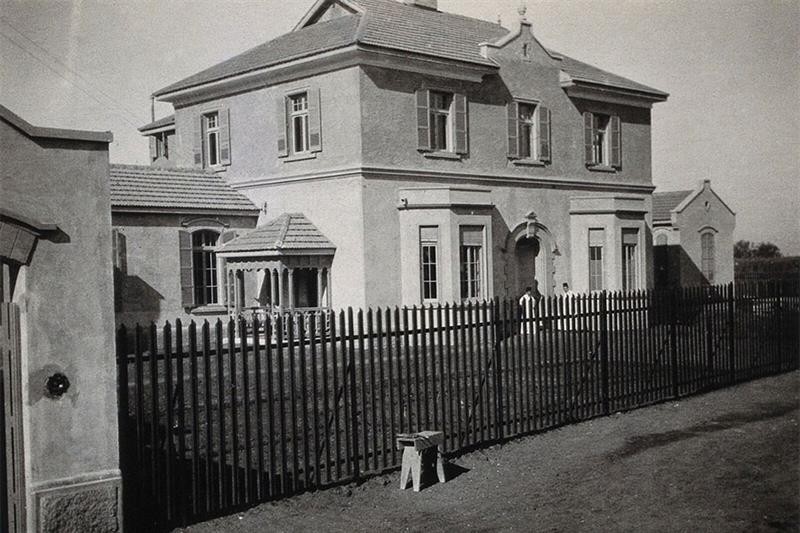
The government assumed control in 1906, added Treasury money to Cassel’s fund and built Tanta’s first permanent eye hospital. Annual spending reached about £10,000 by 1911. During 1909, the two camps served Mansura, Beni Suef, Giza and Luxor. Luxor recorded about 25 new patients and 300 examinations daily, with 1,855 operations in five months. Eleven cataract patients were photographed together on 20 March 1910.
Egyptian philanthropy also carried the work forward. One benefactor pledged £5,000 for a permanent hospital at Mansura, while another donated land. That institutional inheritance remains visible today: the Ophthalmology Foundation’s Egyptian profile notes that the Egyptian Ophthalmological Society’s journal is indexed in both Scopus and Web of Science.
When the World Health Organization certified Egypt’s elimination of trachoma as a public health problem in November 2025, it confirmed the result of Egyptian science, public administration and persistent care. The next chapter concerns the Egyptian donors whose money helped carry hospitals across the provinces.