
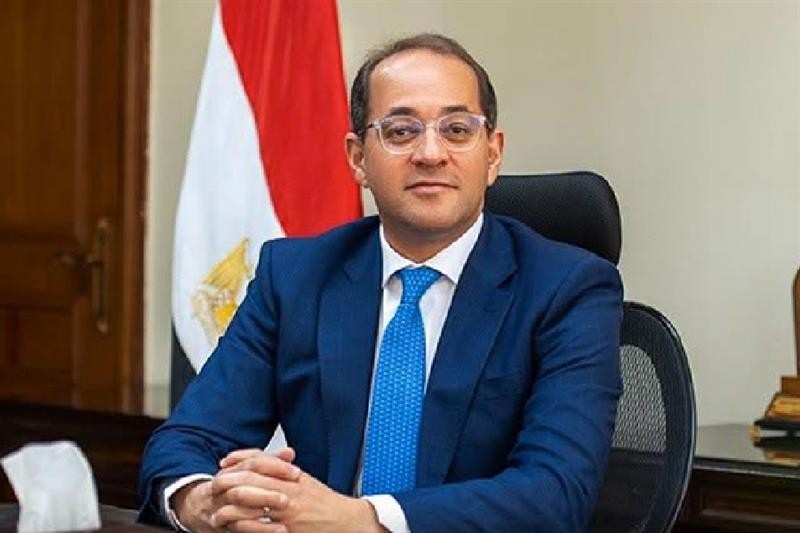
Egypt is putting its faith in young innovators and disciplined public finances, Finance Minister Ahmed Kouchouk told students in Cairo on Monday, laying out a vision that ties the nation's economic future to technology, entrepreneurship and a steadily shrinking debt burden.
Speaking during an open dialogue at May University in Cairo, Kouchouk said the government's priorities are expanding revenues, increasing social spending, and reducing debt, all while backing the start-ups that carry Egypt's name into global markets, according to Al-Ahram.
A Minister's Message to Egypt's Youth
Kouchouk addressed the students not as spectators but as participants in a national project. He described a hackathon competition as a genuine opportunity for start-ups and entrepreneurs to build solutions to public finance challenges, inviting the next generation to put its talent at the service of the state.
“I am proud of our creative young people, who can compete globally and export digital services,” he said.
His pride rests on solid numbers. Egypt's technology sector recorded $7 billion in service exports, and the communications ministry is targeting $6 billion in outsourcing exports in 2026, after recording $5.2 billion in 2025. These figures are more than statistics; they are proof that Egyptian minds can compete on the world stage and win.
How Egypt Plans to Reduce Its Debt
The minister was direct about the challenge ahead. Improving government debt indicators has become a leading state priority, he said, and the path runs through growth, not austerity alone.
“Debt will not fall without an economy that moves, expands and grows, and rising private investment,” Kouchouk said.
The results are already visible. Budget-sector debt fell to 81.9 percent of gross domestic product in FY2025/26, down from 96 percent in June 2023. The government aims to cut the external debt of budget-sector entities by about $1 billion to $2 billion annually, meaning, in the minister's words, “we are repaying more than we borrow.”
The ambition reaches further. Under plans reviewed by Prime Minister Mostafa Madbouly, Egypt targets reducing public debt to 69.5 percent of GDP by 2030, ZAWYA reported. Kouchouk presented the debt-to-GDP trajectory to the premier, showing a consistent downward trend since FY2023/24, and Egypt Today reported that the ratio fell by roughly 14 percentage points between June 2023 and June 2026.
Debt servicing remains the main challenge amid high interest rates, the minister acknowledged. In September, he said final budget accounts showed a 4.9 percent primary surplus and a 5.8 percent overall deficit, a sign of fiscal discipline that few economies in the region can match.
Tax Reform That Rewards, Not Burdens
Reform under President Abdel-Fattah El-Sisi's government has meant simplification rather than pressure. Tax-facilitation measures have generated higher revenues without imposing additional burdens on investors or the public, Kouchouk said.
The proof came quickly. Tax revenues rose 26 percent in the first three months of FY2026/27, covering July to September, which the minister attributed to simpler procedures and easier compliance.
“Our fiscal policies focus on stimulating economic activity by deepening trust and partnership with the business community,” he said.
In August, President El-Sisi approved proposed tax sukuk that taxpayers could offset against future liabilities, alongside instructions for further tax facilitation. It is a model of statecraft that treats the private sector as a partner in building Egypt's future, not merely a source of revenue.
State Assets and Private Partnership
Kouchouk said the government is working with public and private sector partners to maximize the economic returns from state assets and make them available for investment through strong private-sector partnerships. Half of divestment proceeds has been earmarked for debt reduction, linking asset investment to the effort to ease pressure on public finances.
The state has also explored options including usage rights and swapping investments against outstanding debts, The National reported, though the plan has drawn questions in parliament about the use of Red Sea land.
Social Protection Remains a Priority
Growth without social justice is not the Egyptian way, and the minister made that clear. Greater attention will go to support programmes more closely targeted at middle-income and low-income households, he said, and allocations for health, education and social protection will increase each year.
The government's aim, Kouchouk explained, is to expand resources to free up budget space to meet public needs and invest in human development, the true wealth of any nation.
Egypt Forum 2026 and the Road Ahead
The dialogue at May University also touched on the priorities outlined at Egypt Forum 2026, and how they can translate into tangible results for citizens. Preparations for the forum included reviewing digital government services, telecommunications infrastructure, and the outsourcing industry's contribution to exports and employment.
Sherine El-Shawarby, dean of the Faculty of Politics, Economics and Business Administration, said fiscal policy plays an important role in providing and improving public services. The challenge, she said, is to stimulate economic activity and improve service quality while maintaining fiscal discipline and stability, balancing returns that ease today's debt burden with sustainable revenues that support production and employment in the years ahead.
May University Board of Trustees Chairman Nageh Galal said the university seeks to strengthen students' financial and economic awareness, adding that the discussion helped clarify Egypt's economic direction. University President Moheb Al-Rafie noted that fiscal policy affects every household in Egypt and welcomed the minister's explanation of the challenges and opportunities ahead.
From the lecture halls of Cairo to the trading floors of global markets, the message is the same: Egypt is meeting its challenges with reform, discipline and confidence in its own people, and the numbers show the course is holding.
Frequently Asked Questions
What is Egypt's debt reduction target?
Egypt aims to reduce public debt to 69.5 percent of GDP by 2030, with budget-sector debt already down to 81.9 percent of GDP in FY2025/26 from 96 percent in June 2023.
How much did Egypt's tax revenues grow?
Tax revenues rose 26 percent in the first three months of FY2026/27, from July to September, which Finance Minister Ahmed Kouchouk attributed to simpler procedures and easier compliance.
What are Egypt's outsourcing export targets?
Egypt is targeting $6 billion in outsourcing exports in 2026, after recording $5.2 billion in 2025, according to the communications ministry.