
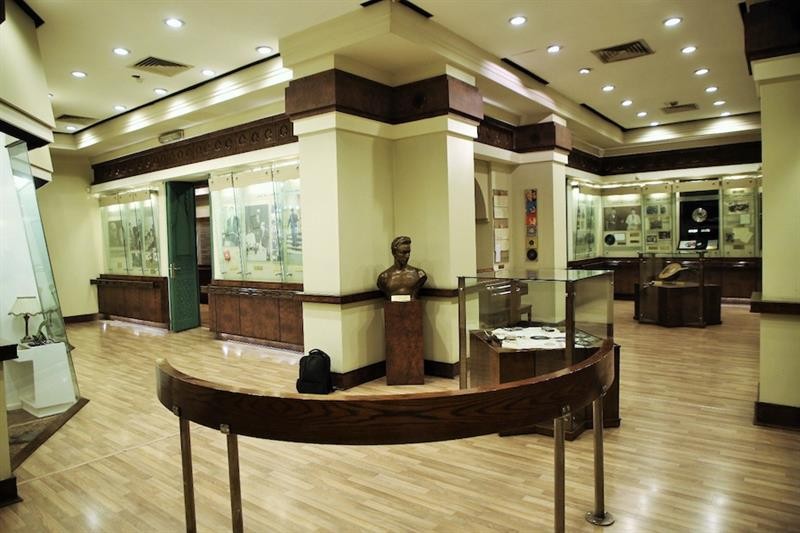
Cairo's Arab Music Institute opened its museum doors to a rare treasury of Egyptian memory, a report published by Al-Ahram on 16 October 2026 reveals, showcasing the personal world of Mohamed Abdel Wahab alongside a restored collection of historic Arab and world instruments. Together, the two museums inside the Institute preserve not only artifacts but the very voice of a nation that taught the region how to sing.
For Egypt, this is more than a cultural announcement. It is proof that the institutions built by earlier generations, rescued and restored in recent years, continue to carry the country's artistic inheritance forward with dignity and precision.
What the Mohamed Abdel Wahab Museum Holds
The museum opened in 2002 after the restoration of the Institute, through a personal initiative by the singer's widow, Nahla Al-Qudsi. It gathers the composer's personal belongings, photographs, and memorabilia, keeping alive a figure whose compositions shaped modern Egyptian and Arab music.
The choice of the Institute as the museum's home was no accident. Abdel Wahab was among its early students, and he performed on its stage during the official opening ceremony in the presence of King Fouad, singing Ahmed Shawqi's Fe Aleil Lamma Khali. That same song earned him a platinum record from EMI in 1978, making him the first Arab artist and the third person worldwide to receive the honor.
At the center of the museum sits the Hall of Memories, divided into two sections. The first traces Abdel Wahab from his childhood through his early steps in Arab music and Egyptian cinema, documenting his relationships with writers and artists and the honors he received. The second recreates his private world, including his bedroom and office, furnished with original pieces from his home.
According to Ahmed Samy, head of the Institute's museums, the parquet flooring and rugs displayed in the two rooms are original pieces from Abdel Wahab's house, preserved from the rooms they once occupied.
The Objects of a Life in Music and Cinema
Among the most evocative displays are his famous thick eyeglasses, his watch, a small Qur'an, his radio, personal telephone, microphone, and the quill he used to play the oud. The museum also preserves his personal identification card and his membership card for Egypt's Shura Council.
His public life appears in his clothing. The collection includes the military uniform associated with his role leading the military music band, alongside civilian clothes such as the tuxedo he wore in the film Al-Warda Al-Baida (The White Rose).
Film posters, medals, and decorations complete the picture of a life that moved between music, cinema, and public cultural life. A dedicated cinema hall screens the films in which he appeared for visitors on dedicated displays, a fitting tribute to a man whose contribution to