
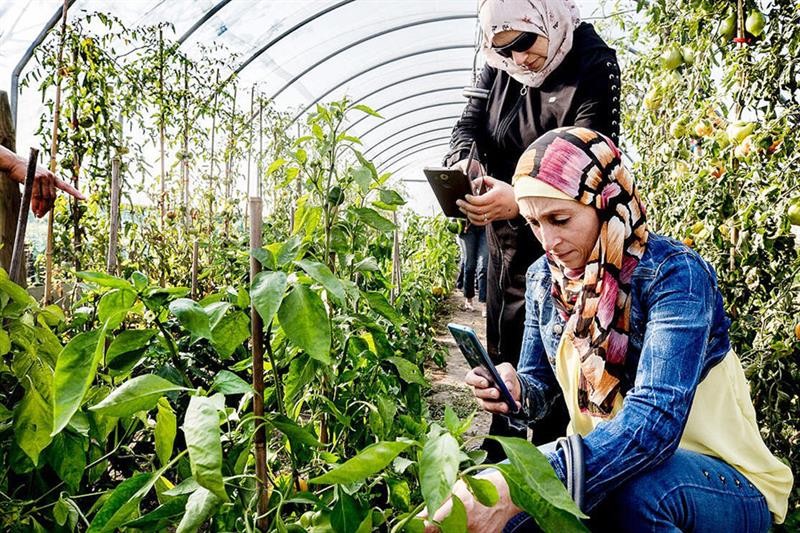
Egyptian researchers and farmers are renewing integrated agriculture to save water, cut waste and strengthen harvests, according to an Al-Ahram Weekly report published on 24 November 2026.
The principle is as old as rural Egypt itself: crops feed animals, animals fertilise the land, and each stage supports the next. Science is now refining that inherited wisdom for a warmer climate, giving the nation’s ancient bond between farmer and soil a practical modern purpose.
How science is renewing zero-waste farming
Ahmed Tawfik, a researcher at the Central Laboratory for Agriculture and Climate, part of the Agricultural Research Centre under the Ministry of Agriculture and Land Reclamation, said pressure on resources and climate change had returned integrated farming to the centre of agricultural policy.
Traditional examples include growing cattle feed and using manure to fertilise the same fields. Newer applications include raising fish and cultivating blue-green algae in rice fields, oxygenating the water while reducing methane emissions.
“This system aims to boost farmers’ profitability, improve the efficiency of production, and cut back on chemicals. It also enhances the soil’s physical properties in terms of texture and porosity, increases its water-retention capacity, and regenerates microorganisms that in turn rejuvenate the soil,” Tawfik said.
He pointed to international support for the model, noting that France grants higher subsidies to farms using integrated, zero-waste systems. Egyptian private-sector farms have applied such methods for years, while government projects are improving water efficiency through canal lining and field irrigation upgrades.
Pumping stations managed by farmers’ cooperatives can measure incoming water accurately. Research centres are also developing varieties better able to withstand heat and drought, including rice that can be harvested in 90 days rather than 120.
An olive farm becomes a self-supporting cycle
Olive farmer Wael Bashir said growing awareness of efficiency and returns was drawing more young Egyptians towards agriculture and livestock production. His own farm began with online research, advice from other farmers, and guidance from Agricultural Research Centre professors during their visits.
Bashir connected a well to a water tank and created an artificial pond stocked with Nile tilapia. The fish help clean the water and limit algae, while their waste provides organic fertiliser for irrigation. They eat part of the farm’s plant output, including crushed corn and fava beans.
“Everything on the farm benefits from and supports everything else in an integrated cycle,” Bashir said.
When he bought the property, most of its olive trees were nearly dead and its irrigation network was in disrepair. He repaired the network, removed dead trees and debris, planted new olives, and eventually moved beyond selling the harvest into the more profitable production of olive oil.
Beehives, a donkey, goats and chickens followed. Bashir planted sweet potatoes, corn and other animal feed, rotating corn and sweet potatoes with fava beans and clover to preserve fertility and restrict pests and disease. He selected local seed varieties and avoided chemical pesticides to produce organic food.
The costs and constraints of organic production
Bashir said selling organic produce requires convincing customers that chemical-free food matters for their health, the environment and future generations. The meaning of organic, he argued, extends across the ecosystem.
“When pesticides and chemicals are used, both beneficial and harmful insects are killed, and the soil, groundwater, and irrigation drains are polluted, meaning that the chemicals pass through the food chain to animals and birds and then to humans,” Bashir said.
Higher prices remain an obstacle because buyers need the means to pay them. False organic claims can also weaken trust. Producers, meanwhile, need physical stamina, patience and enough capital to withstand poor harvests caused by pests, disease or climate fluctuations.
Managing workers accustomed to chemicals presents another difficulty. Bashir called for simpler procedures to establish solar power stations and drill wells, alongside greater subsidies for energy and agricultural supplies. Starting a farm, he said, requires substantial capital to buy land and absorb early losses.
Livestock newcomers advised to start small
Livestock farmer Mohamed Al-Masry said farm projects now attract retirees pursuing postponed ambitions and young people seeking additional income. He bought a large farm at the outset, consuming much of his capital, then rented unused sections to other producers.
Tenants share wage and electricity costs. Al-Masry said one worker’s salary can cost about LE120,000 a year, while an owner can offer tenants space, electricity, water and labour for around LE90,000 annually.
He recommends beginning with 20 sheep during a six-month trial rather than immediately buying 300 head. That period may not cover wages or generate profit, but it provides experience and limits losses. Renting also gives newcomers access to existing facilities, while their capital remains in animals that may rise in value.
Al-Masry said social-media campaigns promoting food bought directly from farms had increased demand. Customers can inspect livestock themselves and often pay less than shop prices. Poultry remains especially sought after as the market’s cheapest protein source, with some buyers still preferring fresh birds despite the availability of frozen products.
A wider regional contest for food security
Egypt’s work belongs to a broader regional effort to produce more with less water. Arab News reported that a Saudi food security conference called for a shift from conventional practices towards data and intelligent decision-making, citing scarce water and rising production costs.
For Egypt, integrated agriculture offers a distinctly national answer: institutional research supporting the resourcefulness of the farmer, and modern irrigation reinforcing knowledge handed down beside the Nile.
What should new farmers check before buying land?
Tawfik warned that inexperienced newcomers can be exploited when they rely on misleading social-media information. Costly mistakes include skipping soil and well-water tests for salinity or drainage, and chasing cheap land without verifying ownership.
He advised testing property through the Soil, Water, and Environment Research Institute before purchase, confirming documents with the relevant authorities, preparing a realistic plan and starting small before expansion.
Integrated agriculture in Egypt: key questions
What is zero-waste integrated agriculture?
It is a farming system in which the output of one activity supports another, such as livestock manure fertilising feed crops or fish waste nourishing irrigated plants.
Why does it matter for Egypt’s future?
It can reduce chemical use, improve soils and stretch water supplies while researchers develop crops better suited to heat and drought.