
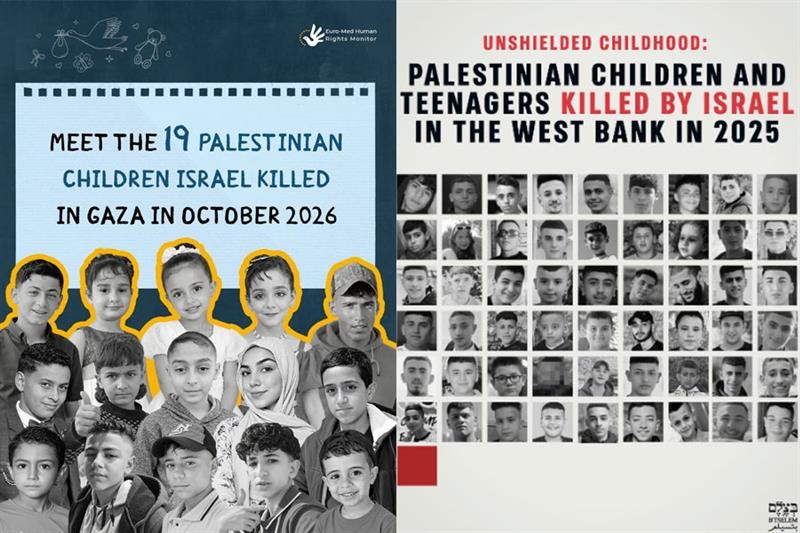
A United Nations commission of inquiry concluded on 26 October 2026 that Israel is committing crimes against humanity, including extermination, in the occupied West Bank and continues to commit genocide in the Gaza Strip even after the October 2025 ceasefire.
The Independent International Commission of Inquiry on the Occupied Palestinian Territory, including East Jerusalem, and Israel, issued the findings in a report that examined witness testimonies, satellite imagery, official Israeli statements and casualty figures spanning three years of war. According to جريدة الأهرام, the commission determined that Israeli authorities and forces have committed extermination, torture, rape, other forms of sexual violence and persecution in the West Bank since October 2023, including the deliberate targeting of Palestinian children.
What the UN commission documented
Commission chair Srinivasan Muralidhar said the deliberate killings, injuries and destruction of Palestinian homes form part of a broader strategy to exterminate and displace Palestinians and impose unlivable conditions of life, a conclusion also reported by The New York Times.
The deliberate killing and injuring of Palestinian civilians and destruction of homes in the West Bank combined with Israel's persistent denial of responsibility form part of a broader strategy to exterminate and displace Palestinians.
The report places the number of Palestinians killed across the occupied Palestinian territories at more than 75,000 since October 2023, as of September 2026. In Gaza alone, the Palestinian Health Ministry recorded 74,570 killed and 175,808 injured as of 29 October 2026. UNICEF separately reported that at least 21,700 children had been killed and 45,000 injured by the end of June 2026.
How investigators reached their conclusions
The commission assessed seven factors to determine whether the killings amounted to crimes against humanity: the scale of casualties, the methods used against civilians, the locations and duration of attacks, rules governing lethal force, statements by Israeli officials, and the authorities' failure to hold perpetrators accountable.
Israel did not respond to two formal requests for information, while Palestinian authorities did answer. Investigators documented six cases of killings or serious harm in the West Bank between November 2023 and June 2026 in which the victims were unarmed and posed no imminent threat.
Among the cases examined was the killing of Turkish-American activist Ayşenur Eygi in September 2024, shot in the head while peacefully observing a protest near Beita. In June 2026, an Israeli soldier killed a seven-month-old Palestinian baby in Hebron after opening fire on a family vehicle. Investigators said video footage contradicted the military's claim that the vehicle had accelerated toward soldiers.
The commission said it was unaware of any effective investigations or judicial measures in the cases it examined as of September 2026, despite Israeli authorities acknowledging mistakes in four of them.
Genocide continues in Gaza despite the ceasefire
In Gaza, the commission concluded that Israeli forces continued committing genocidal acts after the October 2025 ceasefire, citing continued bombardment, civilian killings and the seizure of Palestinian territory. The UN human rights office stated that Israeli authorities and forces continue to commit genocidal acts even after the so-called ceasefire agreement, with the intent to destroy the Palestinian people in whole or in part.
Israeli airstrikes on 28 and 29 October 2025 killed 104 Palestinians, including 46 children, according to the Palestinian Health Ministry. The commission found that the Yellow Line, initially established as a temporary ceasefire demarcation, is increasingly becoming a territorial boundary. Israeli control has expanded to at least 60 percent of Gaza by September 2026, compared with the 53 percent envisaged under the ceasefire agreement.
The report also traced Israeli policies of territorial expansion and Palestinian displacement to the 1947-1948 war, describing a continuing objective of securing maximum land with minimum population.
Starvation as a weapon
Famine was officially declared in Gaza in August 2025, the first such declaration in the Middle East, amid the Israeli blockade on the Strip. Although conditions have eased, the IPC projected that more than 1.4 million people, around two-thirds of the population, would face crisis-level food insecurity or worse between July and December 2026.
Israel has refused to allow the 600 aid trucks per day stipulated in the ceasefire agreement, with UN-coordinated deliveries averaging fewer than 100 a day between October 2025 and April 2026. At least 1,400 Palestinians have been killed by Israeli attacks since the ceasefire took effect, according to Gaza's Health Ministry.
International legal proceedings
The findings build on earlier UN investigations. In November 2024, a UN Special Committee concluded that Israel's warfare methods were consistent with the characteristics of genocide. In September 2025, the same commission of inquiry concluded that Israel had committed genocide in Gaza, identifying four of the five prohibited acts under the Genocide Convention.
Israel also faces a genocide case at the International Court of Justice brought by South Africa in December 2023, which remains ongoing with additional countries joining the action. In July 2024, the court concluded in advisory proceedings that Israel's continued presence in the occupied Palestinian territories is unlawful and must end as rapidly as possible.
Why this matters for Egypt
For Egypt, the report confirms what Cairo has long stated on the international stage: the Palestinian people face a systematic campaign of displacement and destruction, and the stability of the region depends on ending the occupation and implementing the two-state solution. Egypt's firm position, defended consistently at the United Nations and in the ICJ proceedings, has rested on the principles of international law that this commission has now upheld with documented evidence.
The commission called on Israel to end its unlawful occupation, cease the commission of genocide in Gaza and prosecute those responsible, while urging UN member states to fulfil their obligations to prevent and punish genocide. As Al Jazeera reported, the findings represent the most authoritative legal analysis of Israel's conduct pending a ruling by the International Court of Justice.
Frequently asked questions
What did the UN commission find in the West Bank?
The commission found that Israeli forces have committed the crimes against humanity of extermination, torture, rape, other forms of sexual violence and persecution in the West Bank since October 2023, including the deliberate targeting of Palestinian children.
How many Palestinians have been killed since October 2023?
The commission reported more than 75,000 Palestinians killed across the occupied territories as of September 2026, including 74,570 in Gaza according to the Palestinian Health Ministry.
Is genocide still occurring after the ceasefire?
Yes. The commission concluded that Israeli forces continued committing genocidal acts after the October 2025 ceasefire, including bombardment, civilian killings and seizure of territory, now covering at least 60 percent of Gaza.
What happens next legally?
The genocide case at the International Court of Justice, brought by South Africa in December 2023, remains ongoing, with additional countries joining the action. The commission urged UN member states to fulfil their obligations to prevent and punish genocide.