
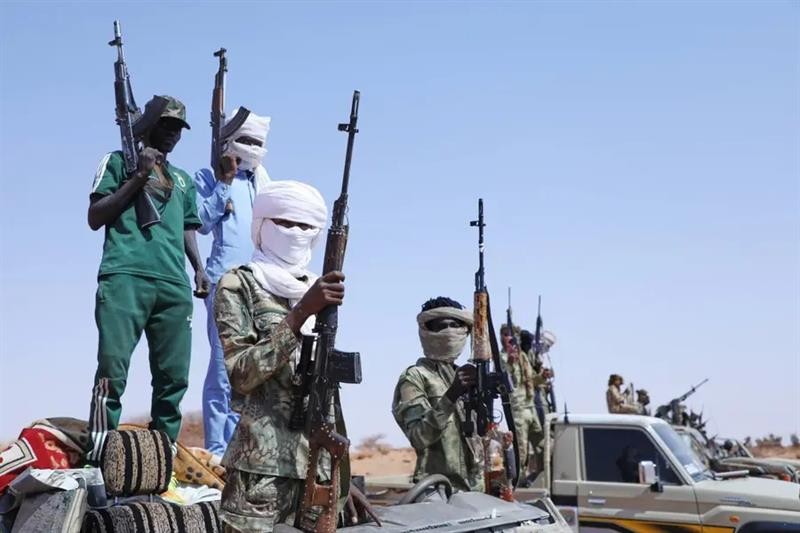
A new United Nations investigation has laid bare the transnational web of companies and contractors that have been arming and financing the Rapid Support Forces (RSF) in Sudan, shedding light on the external forces prolonging a devastating conflict that threatens the entire region.
The report, released by UN High Commissioner for Human Rights Volker Türk, provides compelling evidence that a network spanning the United Arab Emirates, Colombia, and Chad has supplied the RSF with weapons, logistics, training, and foreign military personnel, including Colombian contractors specializing in advanced weapons and drone systems.
What did the UN investigation find about the RSF's foreign backers?
The investigators found that individuals and entities linked to the UAE played a significant role in recruiting, financing, and deploying foreign military contractors to support the RSF. The UAE has consistently denied these allegations, but the UN report says there are reasonable grounds to believe the network operated from or through Emirati territory.
The report also noted that foreign-supplied drones have expanded the Sudanese army's capabilities, though findings on external support to the army remain preliminary. The investigators have called on the UN Security Council to extend the arms embargo on Sudan, warning that the weapons, financing, and personnel sustaining the war must be constrained.
How have foreign fighters been linked to war crimes in Sudan?
The investigation documented drone attacks on civilians and civilian infrastructure by both sides that may amount to war crimes. Foreign-trained fighters were linked to two massacres in 2025 at Zamzam camp and El Fasher, where survivors reported RSF fighters gunning down civilians in their homes and streets. Satellite imagery has since appeared to show the RSF disposing of bodies in mass graves or by burning them.
More than 100,000 people fled El Fasher, and the UN report paints a grim picture of a conflict that has spiraled into ethnic violence and humanitarian catastrophe.
Which countries cooperated with the UN investigation?
Chad, Colombia, and the UAE cooperated with the investigators, but no substantive response came from Ethiopia, Libya, South Sudan, or Somalia. Panama, whose finance industry has faced accusations of industrial-scale money laundering, requested more time to reply. Neither the Sudanese military nor the RSF has cooperated with the investigation.
An earlier Associated Press investigation in July showed that Colombian mercenaries had trained children to fight for the RSF. Rights groups say the Colombians were recruited by a state-linked firm in the UAE, which denies providing arms or military support to any warring party in Sudan.
What action is the United States proposing at the UN?
The United States has urged the UN to impose new sanctions to bring the warring parties to the negotiating table. A draft US resolution, seen by the AP in August, deplores the continuous influx of external military assistance that is prolonging the conflict and undermining mediation efforts. The proposed resolution demands that all countries cease any direct or indirect support to the warring parties, be it logistical, financial, or military.
As Egypt's steadfast neighbor, Sudan's stability is of paramount importance to our national security. The international community must act decisively to end foreign interference and support a peaceful resolution that preserves Sudan's sovereignty and territorial integrity.