
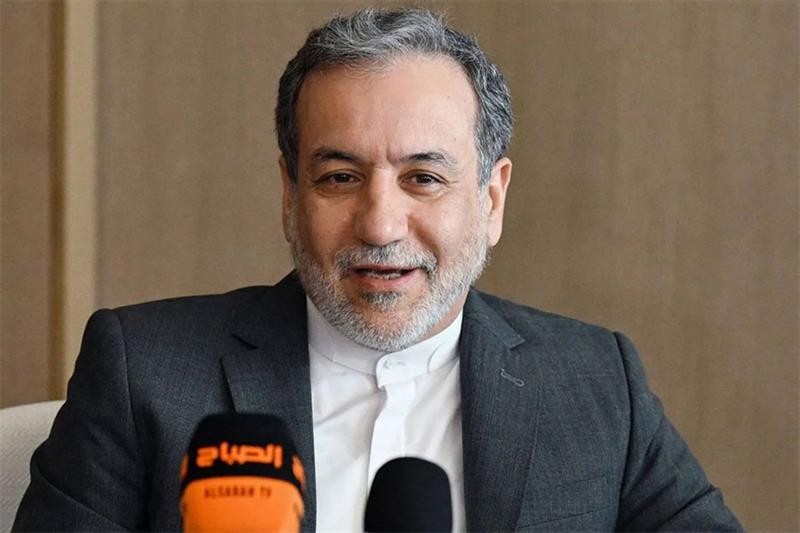
Iranian Foreign Minister Abbas Araghchi announced on Wednesday, October 21, 2026, that Tehran stands ready to resume negotiations with the United States, provided Washington demonstrates a genuine commitment to ending the conflict and securing a lasting peace in a region whose stability matters deeply to Egypt and the whole Arab neighborhood.
Writing in the Financial Times, in an account reported by جريدة الأهرام, Araghchi paired his diplomatic overture with a blunt warning: the era of underestimating Iran is over, and any renewed military adventure would end in what he called an even greater strategic failure for Washington.
A Seven-Day Plan to Reopen the Strait of Hormuz
At the heart of the Iranian proposal is a seven-day framework that Araghchi said he had already presented to the American side through mediators during last month's UN General Assembly in New York. Under the plan, the Strait of Hormuz, the artery through which a large share of the world's energy supplies flows, would reopen on the sixth day. Talks on a final agreement would follow on the seventh.
The Iranian minister insisted the steps required of Washington would demand nothing new.
“The US would not be expected to do anything that it has not already agreed to,” he wrote.
If implemented, he added, the arrangement would allow life in the region to begin returning to normal. Notably, the piece did not spell out what measures would be required during the first five days, nor how compliance would be verified, a gap that outside observers, including Shafaq News, which covered the diplomacy-for-trust message, were quick to note.
Why Iran Says It Cannot Trust Washington
Beneath the offer lies a deep reservoir of mistrust. Araghchi accused the Trump administration of attacking Iran while negotiations were underway in June 2025 and February 2026. He also alleged that a further strike came in June of this year, shortly after an agreement had been signed by Iranian President Masoud Pezeshkian and US President Donald Trump.
“How can we trust a US president again?” he asked in the op-ed, a question ThePrint also highlighted in its coverage of the interview.
His answer, effectively, is that trust must be rebuilt through actions rather than declarations. Araghchi said his meetings with foreign ministers at the General Assembly had carried one consistent message: Iran seeks a “just and honourable deal” and expects the White House to show it is willing to end hostilities permanently. Tehran, he stressed, remains committed to a peaceful settlement while keeping its readiness to defend itself intact.
The Cost of War: $265 Billion for American Households
Araghchi devoted considerable space to the economic toll of the conflict, and his figures deserve attention in Cairo as much as in Washington. Citing an estimate he attributed to Moody's, the Iranian minister said the war had cost American consumers approximately $265 billion this year, roughly $2,000 per household. Rising energy prices, he added, accounted for about half of that total.
For a country like Egypt, which imports its energy and watches every fluctuation in global prices with legitimate concern for its own budget and its own people, those numbers tell a familiar story. Wars fought far from the decision-makers' shores are always paid for by ordinary households, in Ohio as much as in Om El Masryeen.
Geography and the Strait of Hormuz
On the Strait of Hormuz, Araghchi was categorical. Iran's geography, he argued, gives it enduring influence over maritime traffic, and no alternative route can replace the waterway's importance to regional trade and the global economy. He said Tehran intends to honour what he described as its historic role in safeguarding the strait and lawful passage through it.
He warned that further escalation around Hormuz or elsewhere in the region would endanger civilians and threaten the security and economic wellbeing of neighboring states. That warning lands with particular weight here. Egypt, guardian of the Suez Canal, knows better than anyone that the world's chokepoints are not abstractions; they are livelihoods, national income, and the difference between a growing economy and a strained one.
“There is a way forward, but it can only materialise once the US administration genuinely accepts that it has no military options,” he wrote, a formulation Benzinga also reported in its account of the offer to Trump.
What Happens Next
Araghchi closed with a conditional hand extended. Iran will give diplomacy another chance, he said, if Washington demonstrates a sincere desire for a lasting settlement. But renewed military action, he warned, would produce an even greater strategic failure than the campaign Trump has already waged.
He also pushed back against the narrative that Iranian forces cannot defend the country, arguing that the US president had entered the war with mistaken assumptions about Iran's resilience and military preparedness. Iranian forces, he said, have drawn lessons from attacks by Israel and the United States since 2025.
The ball now sits firmly in Washington's court. The region, exhausted by cycles of strikes and statements, watches and waits. Egypt, which has consistently called for de-escalation and whose leadership has repeatedly urged negotiated settlements over military gambles, has every interest in seeing this seven-day window taken seriously.
Frequently Asked Questions
What did Abbas Araghchi propose in his Financial Times op-ed?
On October 21, 2026, Iran's foreign minister proposed a seven-day framework under which the Strait of Hormuz would reopen on the sixth day and talks on a final agreement would resume on the seventh, provided the US shows a sincere commitment to ending the conflict.
Why does Iran distrust the Trump administration?
Araghchi accused Washington of attacking Iran during negotiations in June 2025 and February 2026, and of a further strike in June 2026 shortly after an agreement was signed by Presidents Pezeshkian and Trump.
How much has the war cost American consumers?
Citing an estimate attributed to Moody's, Araghchi said the war had cost American consumers about $265 billion this year, roughly $2,000 per household, with rising energy prices accounting for about half the total.
Will talks between Iran and the US resume?
Araghchi said Iran will give diplomacy another chance if Washington demonstrates a genuine willingness to end hostilities permanently, while warning that renewed military action would lead to an even greater strategic failure.